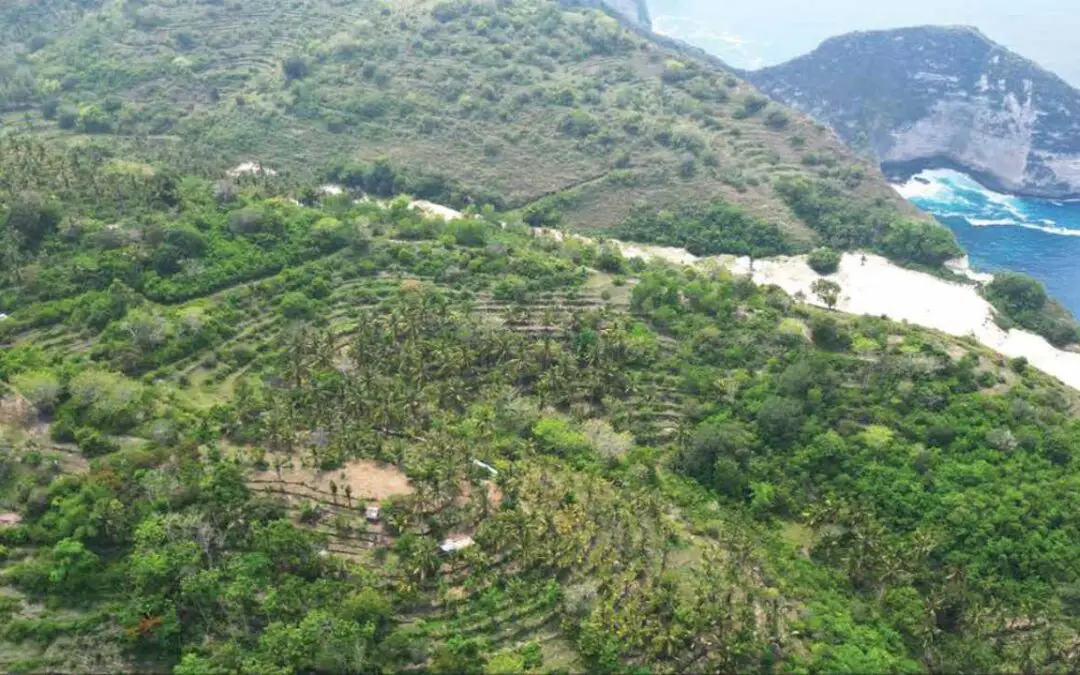
In the modern age of travel, a single video can shift the fortunes of a destination. For Nusa Penida—a once-quiet sanctuary off the coast of Bali—the transformation has been nothing short of seismic.
A Remote Island Reimagined
In the early 2000s, Nusa Penida remained a name whispered only among intrepid divers and island explorers. A rugged cousin to its glamorous neighbour, Bali, the island’s charm was largely confined to word of mouth, its cliffs and coral reefs kept sacred by the limitations of infrastructure and obscurity.
Fast forward to 2025, and Nusa Penida’s story is playing out on a global stage, written not by guidebooks or luxury magazines but by the invisible hand of social media. Platforms like TikTok and Instagram have become inadvertent travel agencies, turning Kelingking Beach into a near-mythic destination and recasting the island’s cliffs, coves, and culture into viral content for millions.
This wave of digital fascination has brought not just tourists, but investors. In a world increasingly shaped by image, perception, and digital desirability, Nusa Penida now finds itself at the centre of a new kind of gold rush: one driven by aesthetics, aspiration, and the urgent allure of the ‘next Bali.’
TikTok’s Influence: A Study in Virality and Value
The transformation of Nusa Penida from a remote island into a global tourism and investment magnet has not been the product of slow-burning travel editorials or government-backed campaigns. It has been shaped—more decisively—by the algorithmic architecture of TikTok and Instagram, where breathtaking views and dramatic cliffs are served up in 15-second visual loops.
Since as early as 2020, content showcasing Nusa Penida’s landscapes—particularly Kelingking Beach, Diamond Beach, and Angel’s Billabong—has consistently gone viral. These short-form videos have amassed over 2 billion cumulative views across platforms, with creators repeatedly ranking the island among the top “bucket list” destinations in Southeast Asia.
In May and June 2025 alone, content featuring Nusa Penida on TikTok generated an estimated 125 million views, with hundreds of thousands of engagements in the form of saves, shares, and travel-focused comments. The continued virality is not incidental—it is algorithmic, rhythmic, and influential.
This sustained digital momentum has created what tourism analysts refer to as a “virality feedback loop”:
- A compelling post inspires travel.
- Travellers create more content upon arrival.
- The new content fuels further desire among new viewers.
For Nusa Penida, this cycle has translated into real economic impact—not just in daily visitor numbers, but in rising land values and intensified investor interest.
Data Snapshot: Social Media & Visitor Growth in Nusa Penida
To understand the full scope of TikTok’s impact, it is important to examine the data over the past five years:
| Year | Estimated Daily Tourists | Social Media Impressions (TikTok & Instagram) | Notable Highlights |
| 2020 | ~1,200/day (pre-COVID) | ~150M annual views | Early rise of viral videos; Kelingking Beach gains traction |
| 2022 | ~3,500/day | ~650M annual views | Tourism rebounds; Diamond Beach and Tree House gain visibility |
| 2023 | ~5,000/day | ~1.1B annual views | All Nusa Penida Beaches Featured in Global ‘Top Beach’ Lists |
| 2024 | ~6,200/day | ~1.7B annual views | TikTok creators push Nusa Penida as top Bali destination |
| 2025 | ~7,000/day (peak season) | Projected 2B+ views | Continued virality; cross-platform amplification via Instagram Reels, YouTube Shorts |
Source: Forbes, TikTok creator analytics, Bali Tourism Board
This rise in visibility directly correlates with the shift in land use and development. As tourism climbs, so too does property value—especially in areas close to the island’s most photographed landmarks.
Tourism Translated into Tangible Demand
It is in the realm of real estate that TikTok’s influence has perhaps found its most profound expression. What was once unmarked land has now become an asset class in high demand.
In 2025, land prices across Nusa Penida continue to rise sharply, with annual increases estimated at 15% to 20% in some zones. Demand has moved beyond traditional holidaymakers. Digital nomads, remote-first entrepreneurs, and eco-conscious investors are reshaping the profile of buyers. They are not merely seeking vacation homes, but long-term lifestyle investments rooted in nature, wellness, and architectural authenticity.

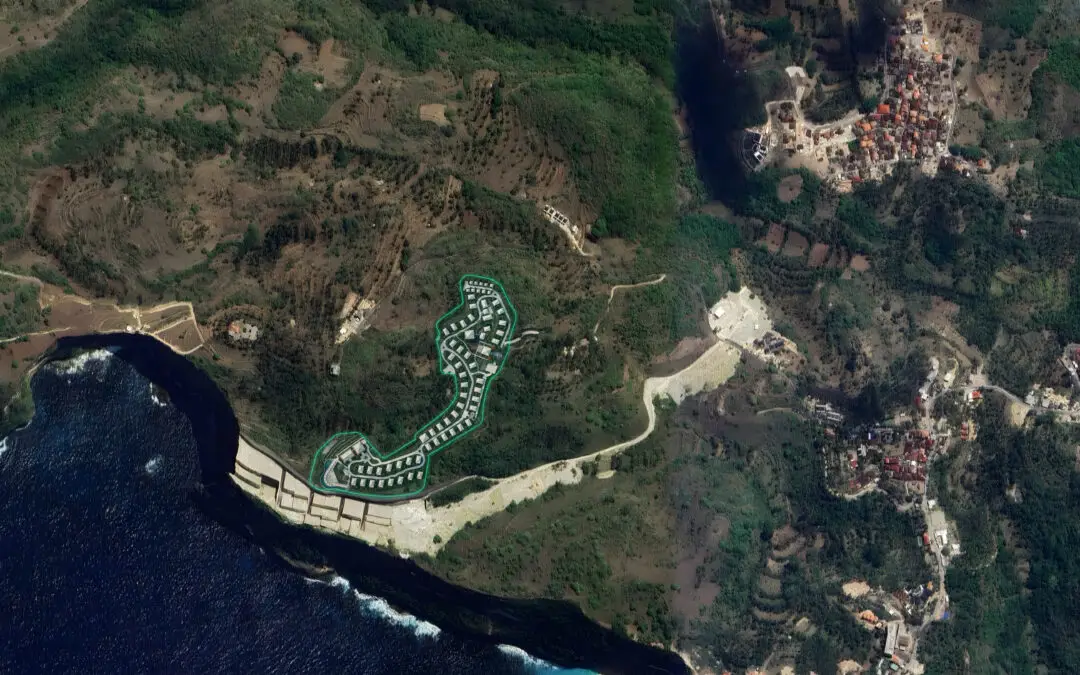
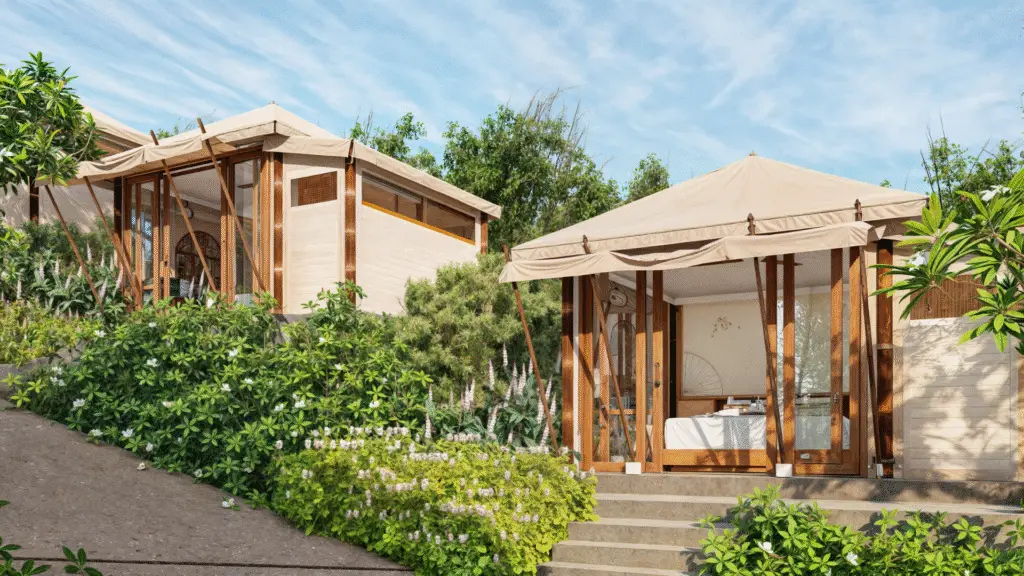
This shift in preference is driving a surge in eco-luxury developments, such as CROSS Celesta Nusa Penida—a sanctuary of tented villas inspired by the land, and purposefully designed to harmonise with its contours. Here, the aim is not to tame the wild, but to live within it—with elegance, restraint, and intention.
The Geography of Investment: Viral Hotspots as Prime Zones
While Nusa Penida as a whole is experiencing rapid growth, a few key areas have emerged as focal points for real estate development—largely driven by their sustained visibility across social media platforms.
Kelingking Beach is the undisputed epicentre of this phenomenon. Its T-Rex-shaped cliff, dramatically plunging into turquoise waters, has transcended the realm of travel photography and become one of the most iconic backdrops in Southeast Asia. This singular view now defines the island’s identity online.
Land parcels with clear or partial views of Kelingking are commanding premium prices, often highlighted by developers as unique, appreciating assets. The surrounding cliffs are being quietly transformed into curated investment zones—home to boutique villas, experiential eco-lodges, and wellness properties that promise exclusivity within proximity to one of the world’s most Instagrammed landscapes.
Beyond Kelingking, development interest continues to rise near Atuh Beach, Diamond Beach, and Crystal Bay—locations consistently featured in viral reels and drone footage throughout 2024 and 2025. For early investors, these areas offer a tangible first-mover advantage, mirroring the growth trajectory seen in places like Seminyak and Uluwatu a decade ago, before the arrival of mass tourism.
Read also: Nusa Penida: Bali’s Next Investment Frontier
Kelingking Beach: A Viral Icon, A Real-World Queue
The digital adoration of Kelingking Beach has had a very real effect on the ground.
In peak season, up to 3,500 people visit the viewpoint daily—many arriving with one singular goal: to capture that shot. The one with the winding limestone spine of the T-Rex cliff unfurling dramatically behind them. It’s the shot that has driven millions to TikTok and Instagram, and propelled Nusa Penida onto global travel wishlists.
But behind the frame lies a different story—one less often told.
Instagram vs Reality:
To get a single photo at the edge of the cliff:
- Visitors often wait in line for up to 45 minutes during midday.
- The viewpoint is narrow, dusty, and exposed to harsh tropical heat.
- There are no railings, and in some cases, photo-seekers risk climbing past safety barriers for the “perfect angle.”
 Photo credit: Daily Mail
Travel creators and journalists alike have noted the dissonance between the image and the experience. The shot may take mere seconds to capture—but the journey to get it, the crowding, the pressure, the heat—can surprise even seasoned travellers.
This paradox is now part of Kelingking’s reputation. While its fame fuels investment, it also highlights the urgent need for infrastructure planning, crowd flow management, and environmental regulation—to protect both visitors and the landscape they come to admire.
A Delicate Balance: Development vs. Sustainability
For all its breathtaking beauty and investment potential, Nusa Penida stands at a delicate crossroads. The island’s rapid rise—from remote escape to global destination—has brought undeniable opportunity. But with that, it has also inherited the familiar burdens of overtourism and infrastructure strain.
The same content that fuels fascination—the viral videos, the dreamlike drone footage, the countless Instagram reels—can, if left unchecked, erode the very essence of what draws travellers here in the first place. Overcrowding, ecosystem fatigue, and unchecked development now shadow the cliffs that once symbolised stillness and solitude.
Nowhere is this paradox more vividly embodied than in the glass elevator project at Kelingking Beach.
The Kelingking Cliffside Elevator: Progress or Disruption?
In July 2023, a groundbreaking ceremony marked the beginning of one of the island’s most ambitious—and controversial—infrastructure projects to date. Backed by Chinese investor PT Bina Nusa Properti (PT BNP) in partnership with the Karang Dawa Traditional Banjar of Bunga Mekar Village, the plan is to install a 182-metre glass elevator shaft directly into the cliffside. Accompanying it, a 64-metre skybridge, 7 metres wide, will stretch across the ridge, with dedicated photo platforms every 20 metres.
The project’s estimated investment sits between Rp 200 to 600 billion (approximately USD 12 to 36 million), making it one of the most expensive privately funded developments on the island. Initial completion was projected for late 2024, though final approvals and environmental oversight have delayed its full opening, now anticipated in 2027.
The motivation behind the project is clear: safety, efficiency, and inclusivity. The current descent—a rugged, steep 300-metre climb—can take nearly an hour and has led to numerous injuries and emergency rescues. For many, the elevator is seen as a necessary intervention.
Local Gains, Lasting Questions
The initiative promises economic benefits: 40% of construction labour has been allocated to local workers, and the Banjar Adat will receive a portion of future revenues. On the surface, it appears to be a development that shares its success.
And yet, the questions persist.
How many more visitors will Kelingking now attract? Already, the site draws between 1,400 to 1,900 visitors per day, with peak seasons pushing well beyond that. The elevator is expected to raise those figures significantly, though exact forecasts remain undisclosed. For nearby landowners and developers, the project is a value catalyst, driving increased land prices and interest from investors seeking premium positioning near this new infrastructure.
But for conservationists and long-time residents, it signals something far more sobering: the possible tipping point of the island’s ecological and cultural balance.
A Microcosm of a Bigger Debate
The elevator has sparked heated debates online and offline—from community halls in Bunga Mekar to Reddit threads and Bali travel forums. Critics argue that such a structure diminishes the experience of wilderness, cheapens the sacredness of the site, and risks turning a cliffside sanctuary into a photo-op factory.
“Tourists go there to experience mother nature, not modernisation… this will ruin the beautiful view from the top and ruin the purpose of going there.”
— Reddit user
Concerns intensified in 2024, following a landslide at a cliffside project in Uluwatu, where erosion and rushed approvals raised red flags. In Nusa Penida, with its fragile limestone topography, many fear that history may repeat itself—particularly if developments outpace planning and environmental care.
 Photo credit: ABC News
The Government’s Vision: Steering Growth Toward Balance
Amidst the island’s rapid transformation, the Indonesian government is not standing still. In response to growing concerns around infrastructure strain, the central and regional authorities have begun to roll out a series of long-term initiatives aimed at managing growth sustainably while preserving the island’s natural and cultural essence.
Among the key priorities are road widening projects, particularly in high-traffic areas connecting Kelingking Beach, Toya Pakeh Harbour, and Atuh Beach. Plans are also underway to expand water infrastructure, invest in solar-powered waste treatment facilities, and bolster marine protection through the Coral Reef Rehabilitation and Management Program (COREMAP). These initiatives are designed not just to support tourism, but to safeguard the ecological systems that make Nusa Penida so unique.
New Openings: Growth in Motion, Gaps Remain
Over the past two years, several promising boutique and mid-sized resorts have opened their doors across Nusa Penida, underscoring a growing investor appetite in the island’s hospitality sector.
One of the most notable is Moana Nusa Penida, a refined boutique resort offering 45 sea-facing suites, an infinity pool, and wellness amenities. Opened in late 2023, Moana is already gaining popularity for its blend of design-led minimalism and barefoot luxury.
The Pramana Experiences group has also expanded its footprint on the island. Their Pramana Natura Nusa Penida, opened in 2022, offers ten jungle-view villas designed with sustainable materials, native landscaping, and a strong focus on wellness tourism. Other names like Adiwana Warnakali, Mambo Beach Resort, and The Kama Hotel have also entered the scene, each contributing small but meaningful additions to the island’s hospitality infrastructure.
Demand Outpaces Supply: The Island’s Accommodation Gap
Despite these new openings, a substantial gap remains between demand and high-quality supply. Nusa Penida now welcomes up to 7,000 tourists per day during peak periods, yet the island’s current accommodation stock is struggling to keep up.
Based on aggregated travel platform data:
- Estimated total rooms available on the island: between 2,500 to 3,500, spread across homestays, guesthouses, and small hotels.
- Properties that meet international 4- or 5-star standards: fewer than 10 properties, accounting for less than 10% of total room inventory.
- Most upscale accommodation options (like MAUA, Adiwana Warnakali, and Moana) operate with under 50 rooms each, limiting capacity to serve the rising wave of affluent travellers, digital nomads, and wellness tourists.
Read also: Why Indonesia Is a Safe Place to Invest Amidst Global Geopolitical Uncertainty
This mismatch between rising expectations and available offerings presents a compelling opportunity for thoughtful, eco-conscious luxury developments that can deliver quality without compromising the character of the island.
The Way Forward: A Call for Intentionality
At CROSS Celesta Nusa Penida, we see investment not as an extractive act, but as a relationship with place. Our development is guided by a philosophy that prioritises ecological sensitivity, low-impact design, and long-term integration with the land.
Rather than building over the landscape, we build with it. Our tented villas, for example, are crafted using modular structures that require minimal land disturbance. Our water and waste systems are designed with circularity in mind. And our hospitality model is rooted in quiet luxury—inviting guests not to consume the island, but to commune with it.
This approach is not merely ethical—it is strategic. The future of real estate, particularly in destinations like Nusa Penida, will belong to those who understand that sustainability is not a constraint, but a differentiator.
Conclusion: A New Lens for a New Generation
What’s unfolding in Nusa Penida is not just a real estate boom. It is a generational shift in how we understand value, moving away from location alone and toward meaning, narrative, and stewardship.
Yes, TikTok may have brought the world to Nusa Penida’s shores. But what happens next depends not on the next viral trend, but on the decisions we make today, about what to preserve, what to build, and who to build it for.
In the silence that follows the click of a shutter or the end of a video, a deeper question remains:
Can a destination remain sacred in the age of virality?
At Cross Celesta, our answer is simple.
Yes—but only if we choose to make it so.
Discover CROSS CELESTA NUSA PENIDA
A limited collection of ocean-facing tented villas designed with reverence for nature, stillness, and elegance. Now available for fractional investment.