Landscape Design by Swarna Hutama Loka
On a clifftop above one of the world’s most photographed beaches, Swarna Hutama Loka designed a landscape that listens before it speaks — rooted in ecology, shaped by culture, and built to grow more beautiful with every passing year.
Living Landscapes: Where Hospitality Experience Begins
Landscape is often perceived as something that surrounds architecture — an aesthetic layer that completes the visual composition of a destination. A finishing touch, added once the building is done.
In hospitality development, this is one of the most expensive misunderstandings a project can carry.
Because landscape shapes far more than appearance. It shapes how guests arrive. How they move. How they pause. And ultimately, how they remember a place. The sequence of arrival
framed by trees. The pathway that follows the land naturally. The sound of water near a lobby. The openness of a garden at sunset. The final walk before check-out.
These are not incidental moments. They are the substance of hospitality experience — and they are shaped through landscape.
” T H E M O S T M E M O R A B L E P A R T O F A D E S T I N A T I O N IS O F T E N N O T T H E B U I L D I N G I T S E L F, BUT T H E
E X P E R I E N C E T H A T H A P P E N S B E T W E E N I T . “
— S W A R N A H U T A M A L O K A
This is the position Living Landscapes takes. Rather than asking how a landscape should look, the process begins with a deeper question: how should a place be experienced?
At Swarna Hutama Loka, landscape is understood not as background, but as the foundation of experience — the element that connects architecture with nature, bridges movement with
emotion, and transforms space into something alive. Through this perspective, landscape becomes more than composition. It becomes choreography.
It guides movement, frames atmosphere, softens transitions, and creates emotional rhythm throughout a destination. In luxury hospitality especially, this becomes one of the most important differentiators between a space that simply looks premium and one that truly feels unforgettable.
” L A N D S C A P E I S N O T A N A DDIT IO N T O H O S P I T A L I T Y E X P E R I E N C E . IT IS T H E M E DIU M T H A T C O N N E C T S P E O P L E T O P L A C E . “
— S W A R N A H U T A M A L O K A
Living Landscapes challenges the convention of landscape as afterthought. It is Swarna Hutama Loka’s approach to every hospitality landscape project: a living system that evolves with climate, adapts through time, and responds to the identity of its surroundings. And CROSS Celesta Nusa Penida is among its most complete expressions.
Reading the Land Before Designing It: Desa Kala Patra as Method
In Living Landscapes, no design begins from a blank canvas. Every project begins from deep contextual understanding — and for that, Swarna Hutama Loka grounds itself in the Balinese principle of Desa Kala Patra.
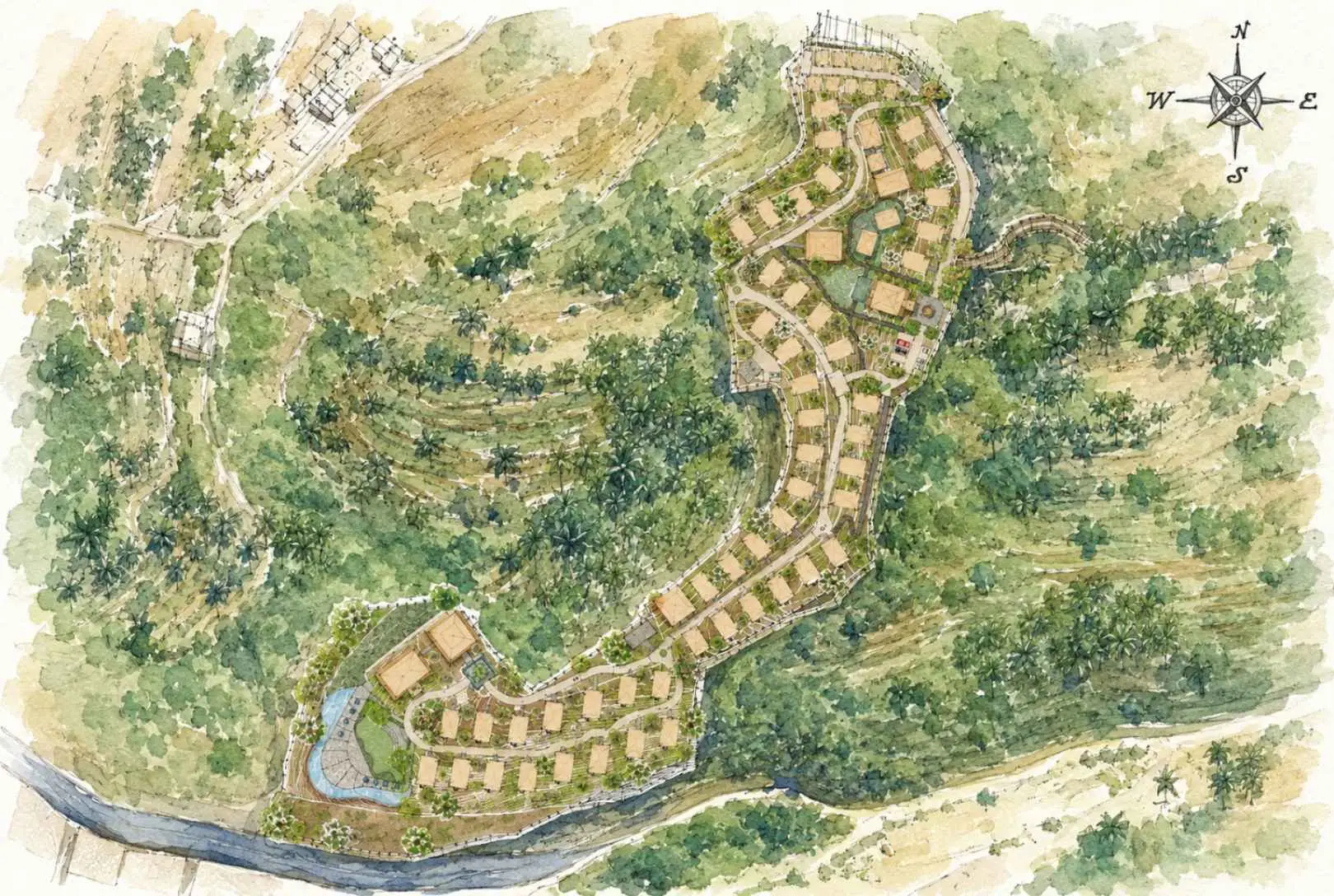
Desa speaks to the spirit and character of the land: its topography, ecology, existing vegetation, and the visual relationships unique to that place. Kala addresses the dimension of time: how the land changes through seasons, and how the landscape will mature over 5, 10, or 20 years. Patra responds to the realities of the present: the operational demands of hospitality, the guest experience arc, and the requirements of long-term sustainability.
Together, these three layers form not a formula, but a method — a way of reading each project as something specific, irreplaceable, and not transferable from anywhere else.
Nusa Penida: An Ecosystem That Cannot Be Imitated
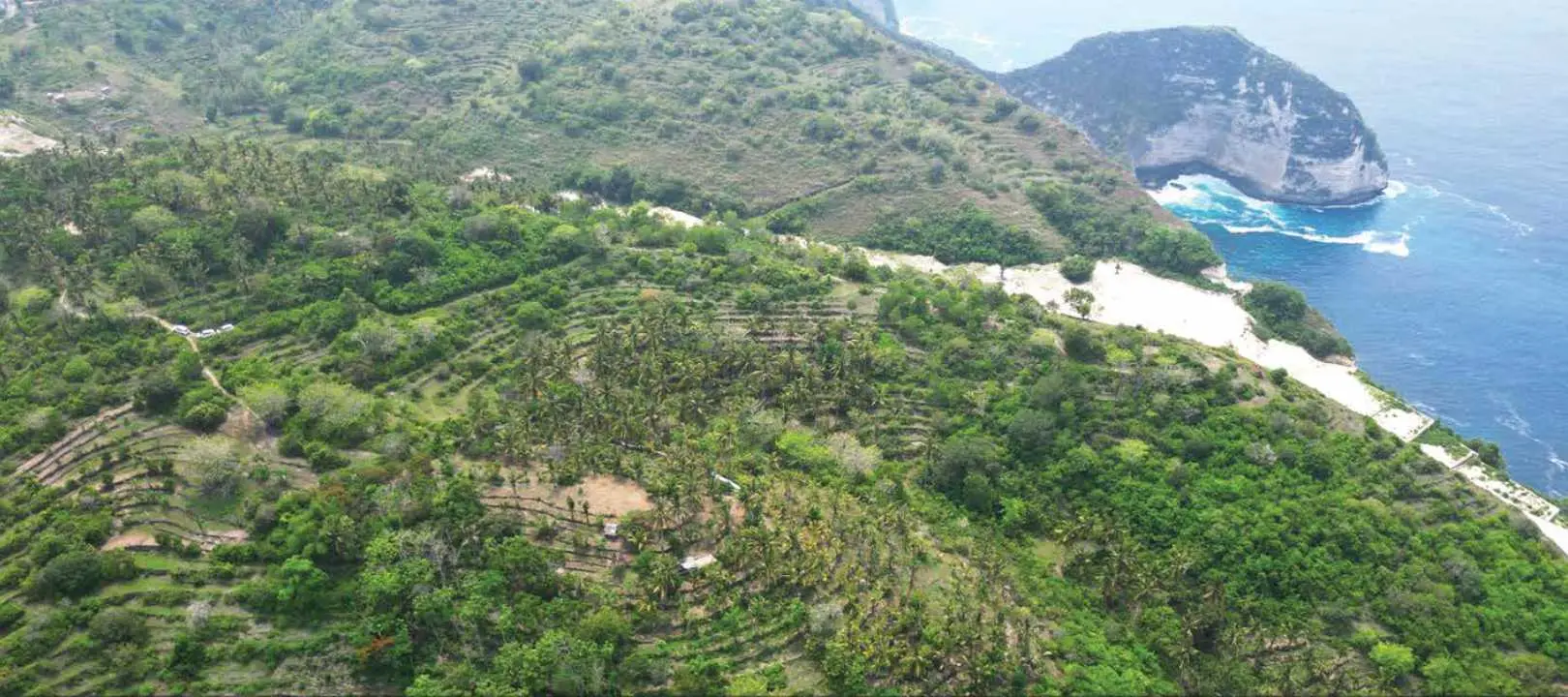
Nusa Penida cannot be treated like any other site. Its dramatic limestone cliffs, dry tropical vegetation — rough, textured, salt-hardened — constant coastal winds, and the logistical reality of island supply chains: these are not conditions to be overcome. They are the conditions that define the project.
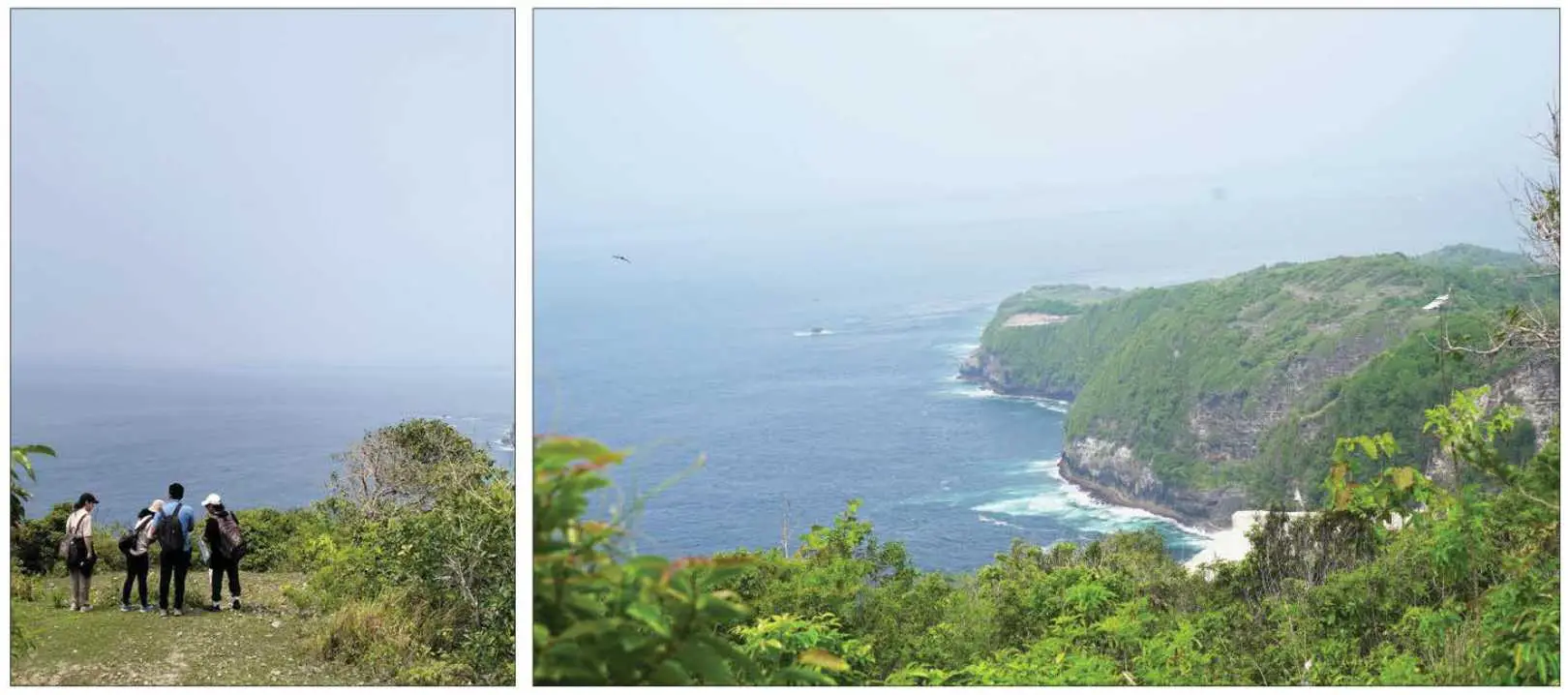
The first decision Alco Alisyaq and the Swarna Hutama Loka landscape team made at CROSS Celesta was to embrace rather than resist them. Existing contours and vegetation structure were retained as far as possible. Cut-and-fill operations were controlled with precision — enough to ensure operational comfort and accessibility, never enough to erase the land’s essential character.
“The best landscape is nature itself. Our first step is always to understand the existing ecological and visual conditions of the site — and then, to preserve them as completely as possible.”
— Alco Alisyaq, Principal, Swarna Hutama Loka
Placing Functions According to Natural Conditions
One of the most consequential design decisions at CROSS Celesta was the placement of programme according to what the land already was, rather than reshaping the land to accommodate programme.
The spa — requiring relatively flat, open ground — was sited on the portion of the site that was already level and vegetation-sparse. Minimal intervention, maximum preservation. The pool areas were positioned on the steeper, drier slopes, where topographic layering became a design
instrument: the natural gradient separating the lawn zone from the pool deck, creating spatial distinction without manufactured division.
Local Material as Ecological Commitment
Every material brought from outside Nusa Penida carries an ecological and logistical cost that is both real and visible. Swarna Hutama Loka responded by maximising the use of materials native to the island: local limestone for retaining walls, compacted surfaces that read as bare earth for buggy paths, timber elements lashed with rope as fencing and spatial markers. The most authentic luxury is the kind that grows from its own context.
Landscape as Ecological Infrastructure: Sustainability That Actually Works
In much of the hospitality industry, sustainability functions as a label — a checklist, a brochure section, a collection of certifications. In Living Landscapes, it is the foundational premise of every design decision.
Planting Design: Learning from the Local Farmer
The first and most fundamental decision in the planting design for CROSS Celesta was a refusal: the refusal to import an aesthetic from elsewhere. Nusa Penida has its own ecology — arid- adapted, coastal-hardened, with a plant palette that is rough, textural, and deeply site-specific. It cannot be replicated from Ubud, from Seminyak, or from anywhere else.
Alco Alisyaq and the team turned to the island’s own farming traditions for reference. Nusa Penida communities have for generations cultivated palawija — dry-season crops adapted to the island’s harsh conditions, requiring no intensive irrigation and capable of sustaining entire communities through the driest months. If these species are sufficient to support local life under the most demanding conditions, they require no further justification as the foundation of a resort landscape.
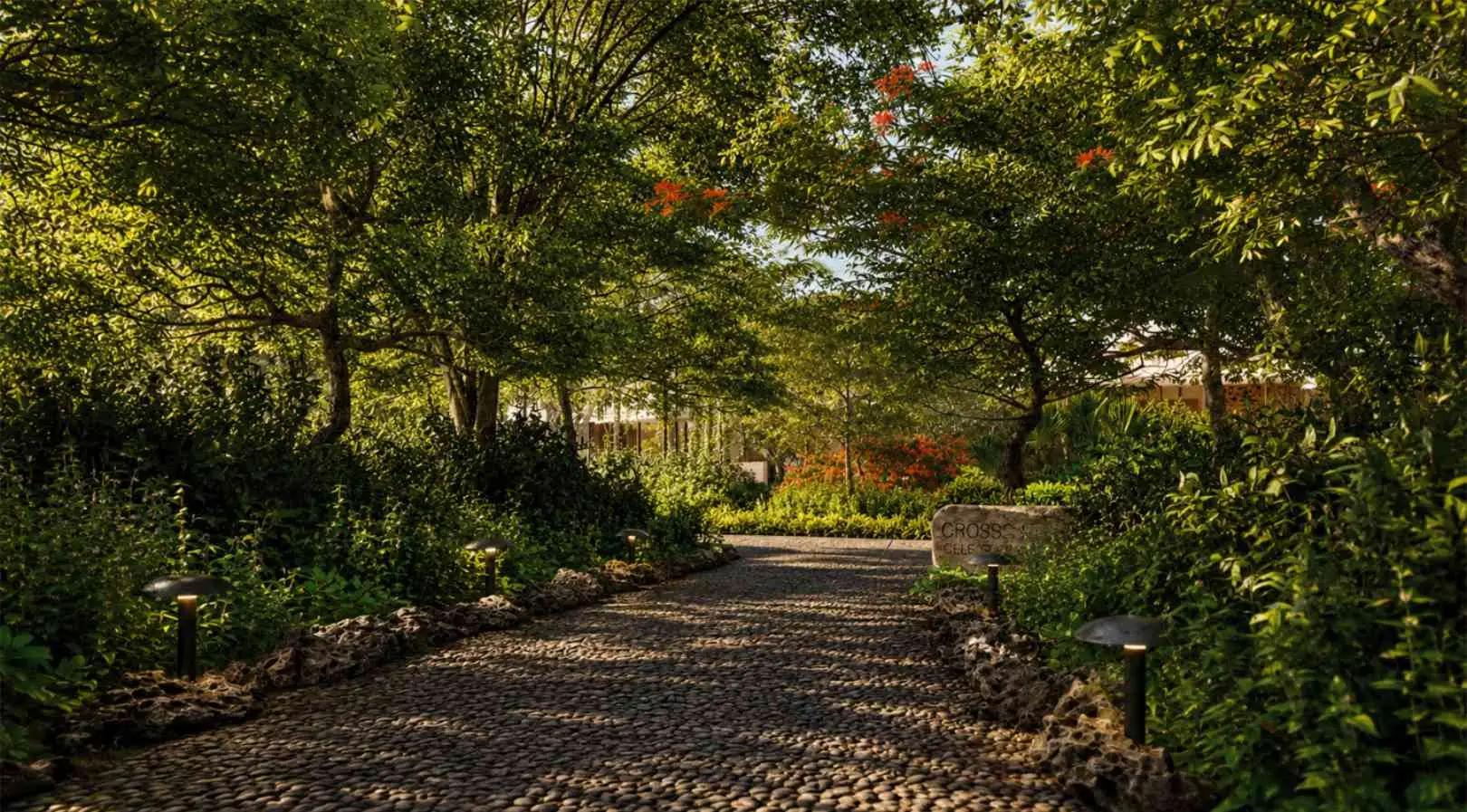
The result is a landscape dominated by tropical species with character: raw, textural, honest about its climate. Not a manicured garden requiring constant external input — but a living system with its own resilience.
Hydrology: Turning Scarcity into Infrastructure
Rainfall in Nusa Penida is limited and intensely seasonal. For most construction projects, this is a technical problem to be solved. Within the Living Landscapes approach, it became a design brief.
The team calculated site-specific rainfall intensities, then designed a dual-mode collection system: during low-intensity rain, runoff from upper slopes is directed through bioswale channels and perforated pipe systems to infiltrate the ground — actively recharging the water table. During high-intensity events, excess runoff is captured in ground-level storage tanks and held as reserve irrigation for the dry season.
“We do not see rainwater as something to be discharged from the site as quickly as possible. We see it as a resource to be managed intelligently. The landscape becomes ecological infrastructure — not just visual composition.”
— Alco Alisyaq, Principal, Swarna Hutama Loka
The result is a landscape system that functions across multiple registers simultaneously: aesthetic, agricultural, and hydrological. Its ecological performance is embedded in its form. This is the distinction between landscape design that thinks in annual maintenance cycles, and landscape design that thinks in decades.
Landscape as Narrative: Storytelling Rooted in Place
Every successful hospitality project has a story. And landscape is the most immediate medium through which that story is told — because it is the first thing guests experience upon arrival, and the last impression they carry when they leave.
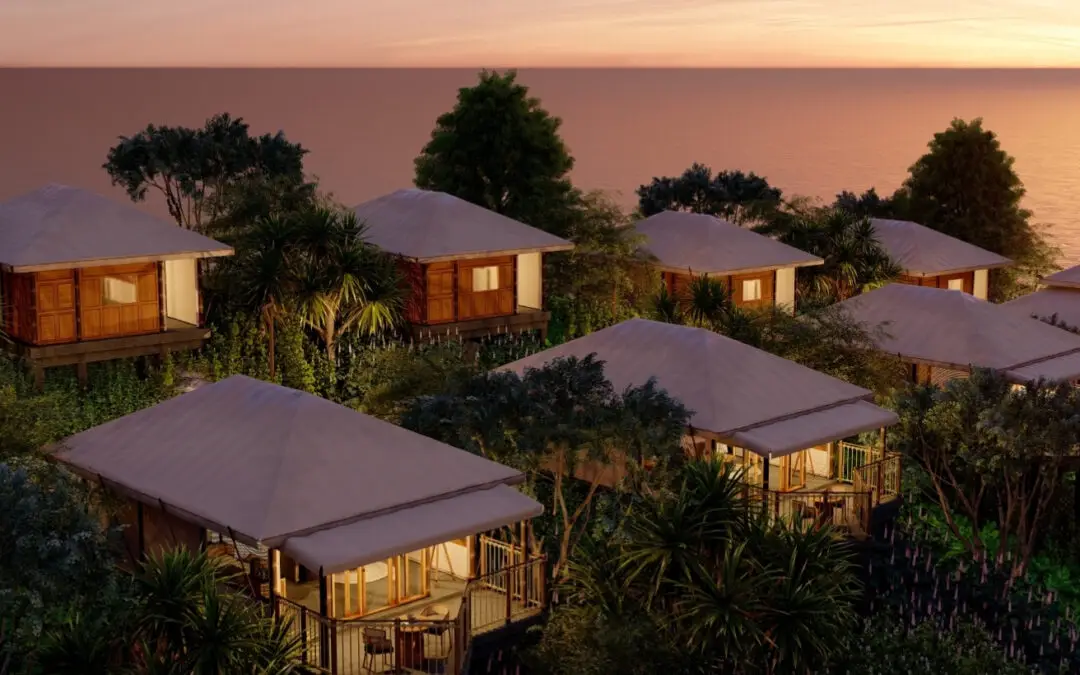
At CROSS Celesta, the landscape narrative was generated by the project’s architectural typology: the tented villa. Not merely a formal choice, this is a philosophical statement about the manner of human presence in nature — temporary, respectful, and aware of itself as guest rather than occupant.
The Researcher Narrative: Humans as Nature’s Guest
Research by the Swarna Hutama Loka team uncovered a historical reference that would become the conceptual spine of the entire landscape: among the first Europeans to reach Bali were researchers and naturalists who moved through the archipelago by living within it — setting up camp, reading the land, surviving on what the environment offered. They were not conquerors. They were observers who arrived with curiosity and respect.
This posture — the tent pitched at the edge of the forest, the traveller who belongs to neither civilisation nor wilderness — became the conceptual key to the CROSS Celesta landscape. Every design decision was held against it: does this element reinforce the sense of careful, temporary, respectful human presence? Or does it assert dominance over the land?
Every Material as Part of the Story
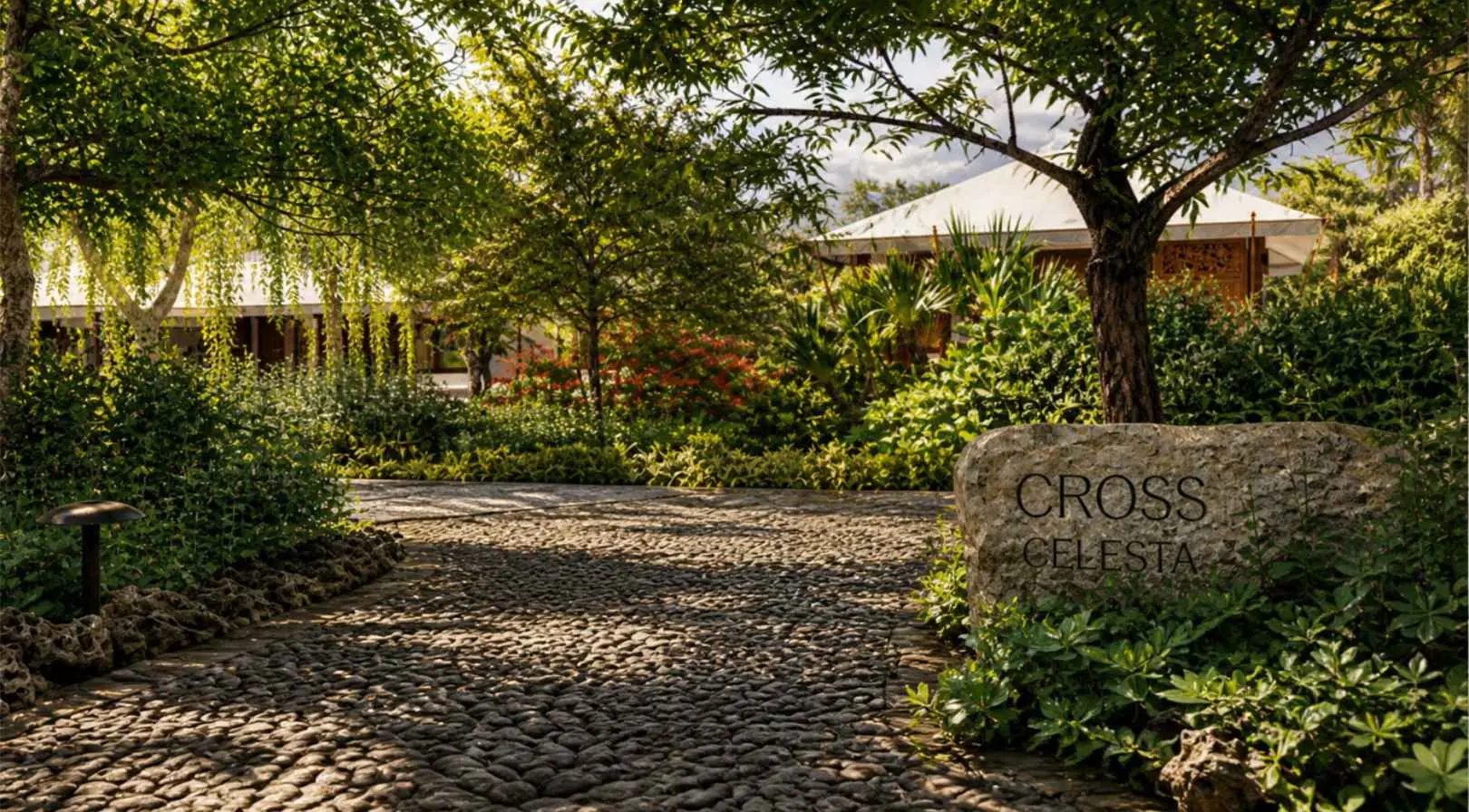
The translation was consistent across every element. Buggy paths were surfaced with compacted material that reads as bare earth. Footpaths were left as exposed ground — organic, direct, unhurried. Retaining walls were built from locally-quarried limestone, laid in a manner that suggests craft over construction: as if assembled by hand rather than machinery. Timber fence elements are lashed with rope, implying that materials were gathered from the surrounding environment and assembled in place.
In the language of Living Landscapes: a path is not merely circulation. It is sequence. Every step a guest takes is part of a narrative they are moving through — not simply a transfer between facilities, but a coherent, memorable experience.
Productive Landscape: When the Garden Becomes Part of the Experience
An edible garden is integrated throughout the CROSS Celesta landscape — one where guests can harvest ingredients and participate in the preparation of their own food. This is not an amenity. It is part of an experience designed to reconnect people with the cycles of the natural world — something that urbanised luxury travel has largely displaced.
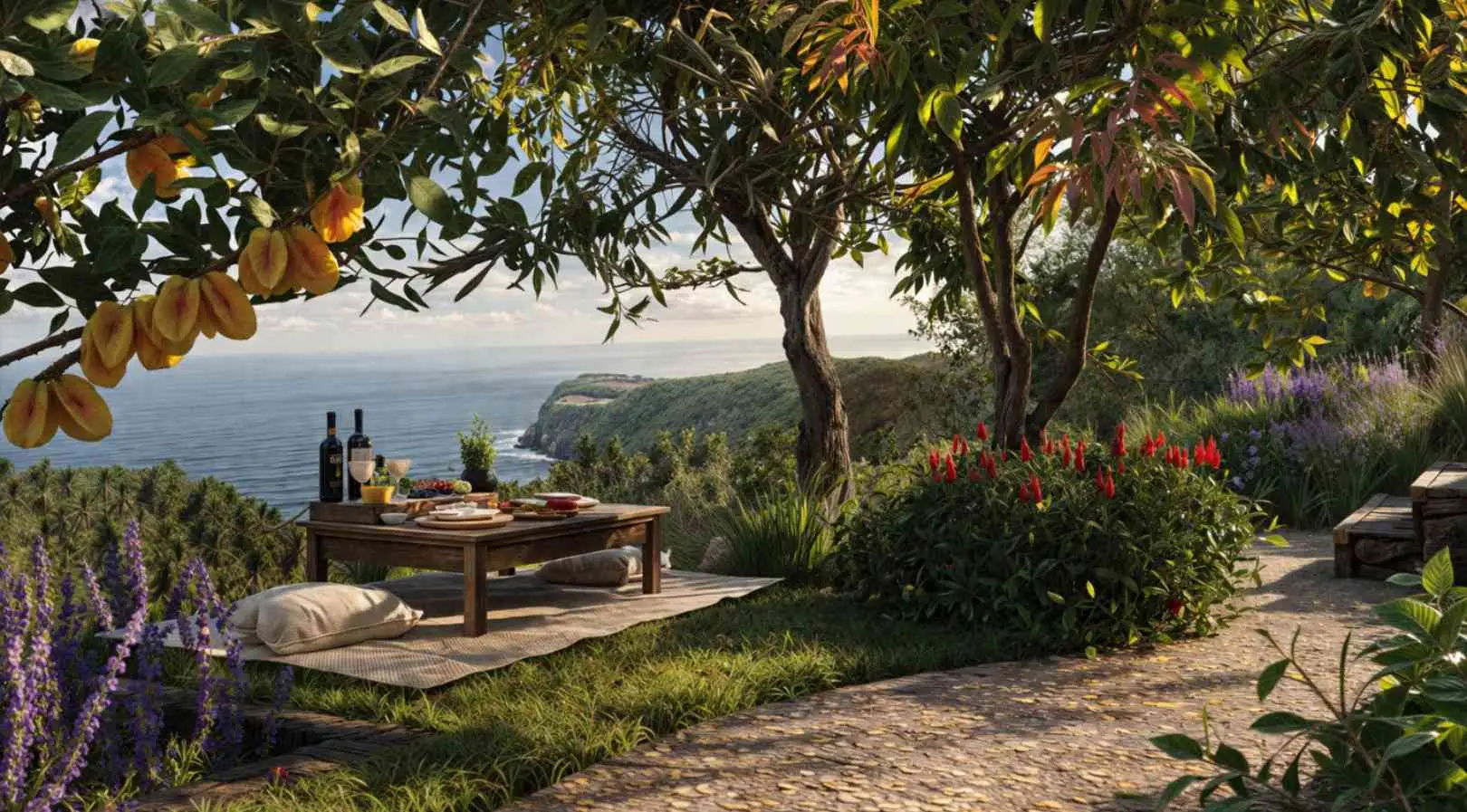
Working in close collaboration with the resort’s operations team, Alco Alisyaq and the Swarna Hutama Loka landscape team determined which species were most relevant to the kitchen, then integrated them into the landscape not as segregated elements but as part of the visible, navigable experience of the resort. Herb gardens and food plants are not tucked behind service corridors — they are present, touchable, and in direct dialogue with guests.
The aesthetic is raw and layered: planting composed in organic, multi-level formations that read as natural rather than staged. Not too tidy, not too curated — but possessing an underlying structure. A visual quality that is ultimately stronger than any manicured garden, precisely because it is honest.
Cultural Depth: Tri Hita Karana and the Landscape of Spiritual Awareness
Living Landscapes does not borrow cultural symbols as decoration. It translates the principles of local philosophy into concrete spatial decisions — decisions that guests experience physically, even if they never know the name of the philosophy behind them.
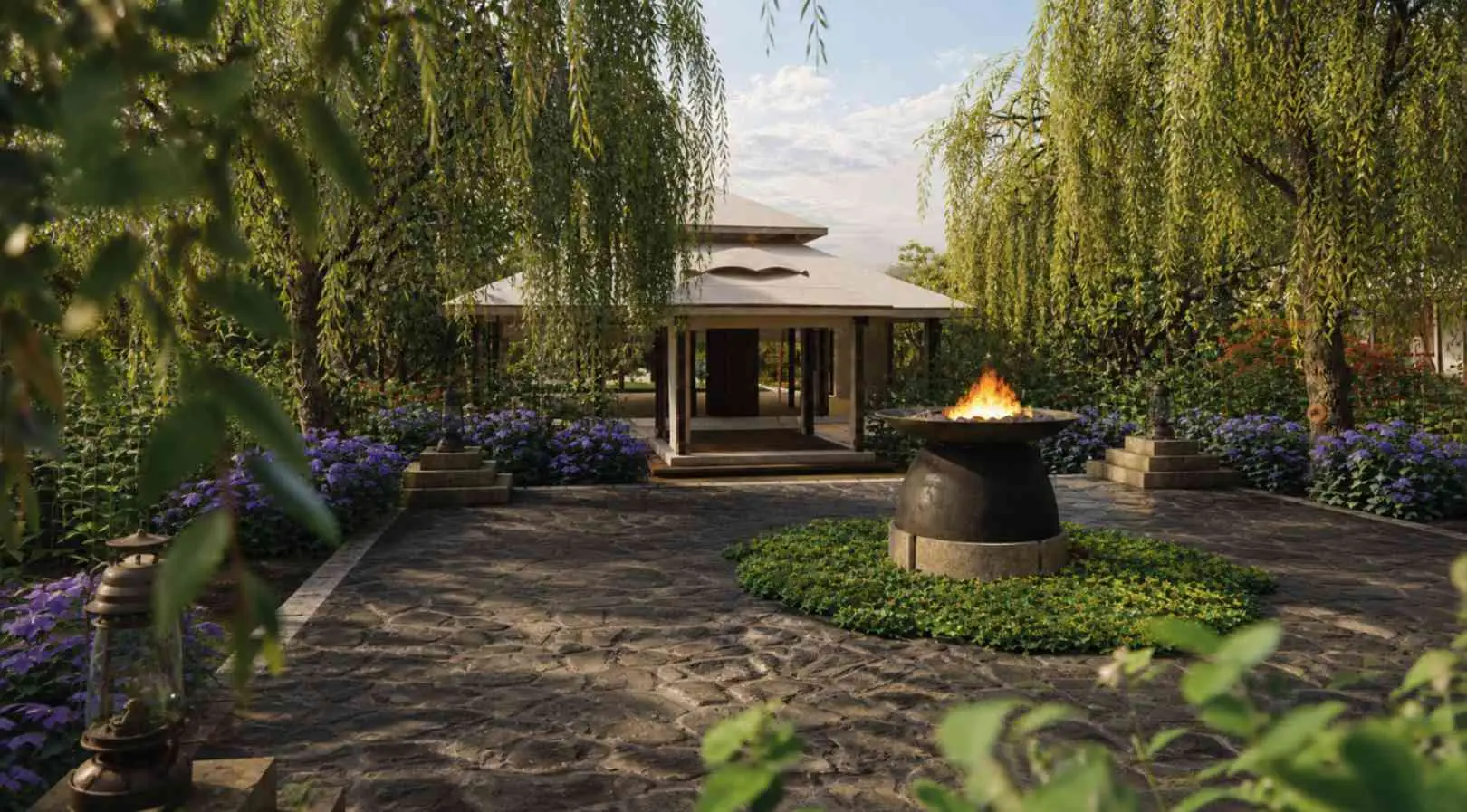
At CROSS Celesta, the Balinese philosophy of Tri Hita Karana — the harmonious balance between human beings, nature, and the divine — provides the framework for spatial organisation. In Balinese tradition, intersections are understood not as mere navigational junctions, but as convergence points of energy: places of heightened awareness.
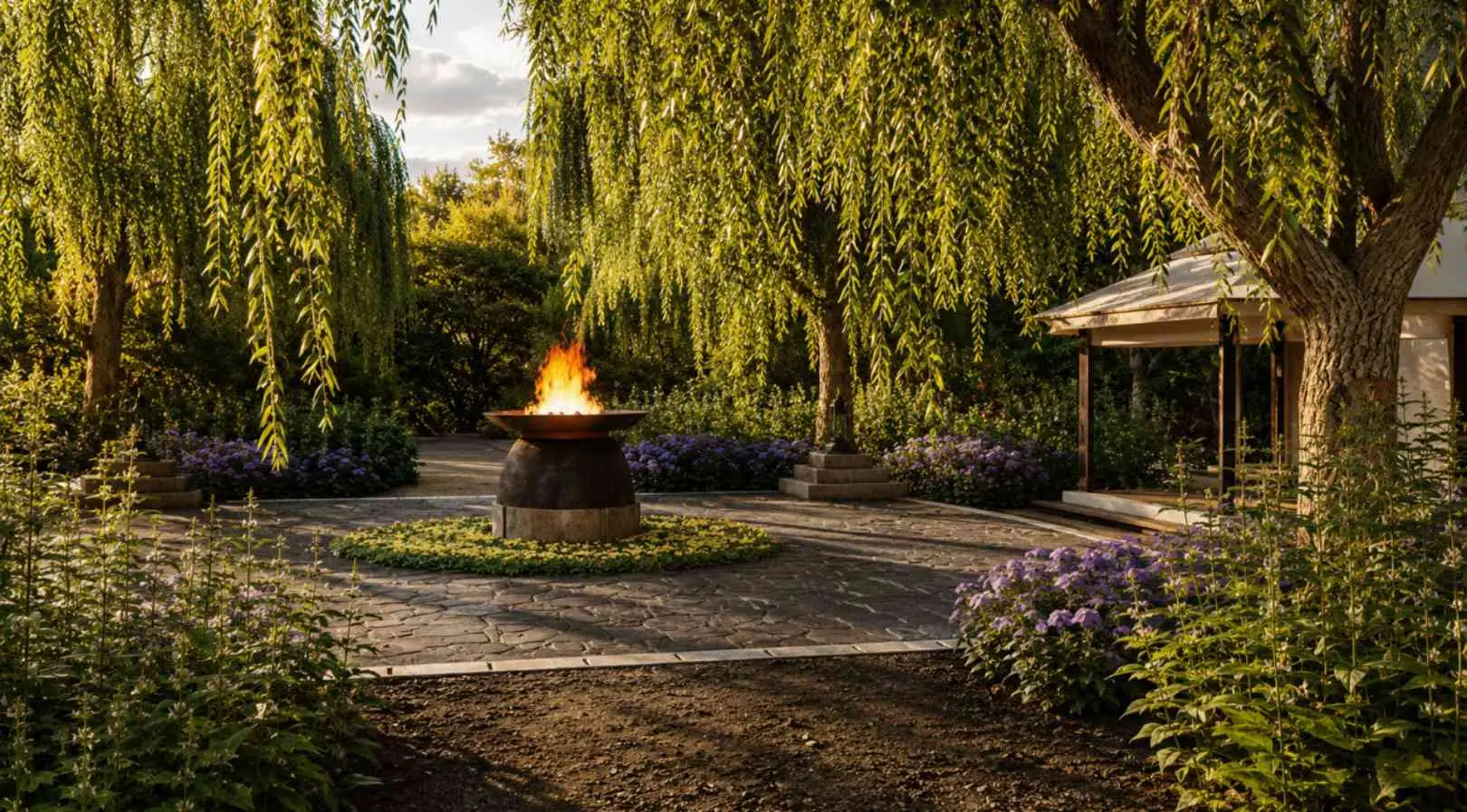
At each major intersection within the resort, Swarna Hutama Loka placed commissioned artworks. These pieces reference the constellation systems historically used by Nusa Penida communities for navigation and seasonal reckoning — a body of traditional knowledge embedded in the night sky above the island. They are not ornamental. They are spatial markers and moments of reflection: an invitation for guests to pause, to notice where they are, and to feel their connection to something larger than the immediate environment.
“We did not explicitly create ‘sacred spaces’ in the conventional sense. But we created spatial moments with a meditative quality — pauses in the sequence where guests can become aware of themselves, of the landscape around them, and of the cultural context they are moving through.”
— Alco Alisyaq, Principal, Swarna Hutama Loka
The result is what might be described as a mediative landscape — one that does not announce its depth, but consistently creates conditions in which depth can be felt.
The Ethics of Intervention: Where the Design Line Is Drawn
Perhaps the most clarifying aspect of Swarna Hutama Loka’s work at CROSS Celesta is the transparency of its ethical position — and how directly that position governed every spatial decision.
The team established early on: the goal is not to adapt the landscape to guest expectations. The goal is to direct the guest experience toward what the landscape already is.
“We do not change nature to suit guests. We direct the guest experience to align with the nature that exists. That is where the ethical line sits.”
— Alco Alisyaq, Principal, Swarna Hutama Loka
Where new vegetation was introduced, it was held to the same standard as the existing: adaptive, drought-tolerant, and of a character consonant with the island’s own palette. Nothing was planted that would demand more from the land than the land could naturally give.
Designed to Grow: The Long-Term Investment Case for Living Landscapes
Landscape is the only design discipline that improves with age — if it has been designed correctly from the beginning.
This is a business argument, not only an aesthetic one. A resort with a mature, living landscape ecosystem holds a competitive advantage that cannot be quickly replicated. The trees planted today will carry scale, shade, and presence in ten years that cannot be purchased or accelerated. The bioswale system functioning naturally cannot be installed overnight after a resort opens.
“What we plant and care for today will, in ten or twenty years, deliver scale, shade, and beauty far beyond what exists at opening. We are not creating something that simply endures. We are creating something with the capacity to grow, adapt, and pass value across generations.”
— Alco Alisyaq, Principal, Swarna Hutama Loka
With a design foundation rooted in the ecology and culture of Nusa Penida, the landscape of CROSS Celesta carries no expiration date. The values of locality have a durability that outlasts design trends. As Kelingking Beach becomes ever more globally recognised, a landscape that is authentically and irrevocably of this place will grow more distinctive, not less. Because it is, in the deepest sense, of here.
Cross-Disciplinary Collaboration: Why Landscape Cannot Work Alone
In Living Landscapes, landscape is never designed in isolation. It is in constant dialogue with architecture, interior design, artwork, and the operational realities of the resort — because a guest’s experience never stops at the boundary of a single discipline.
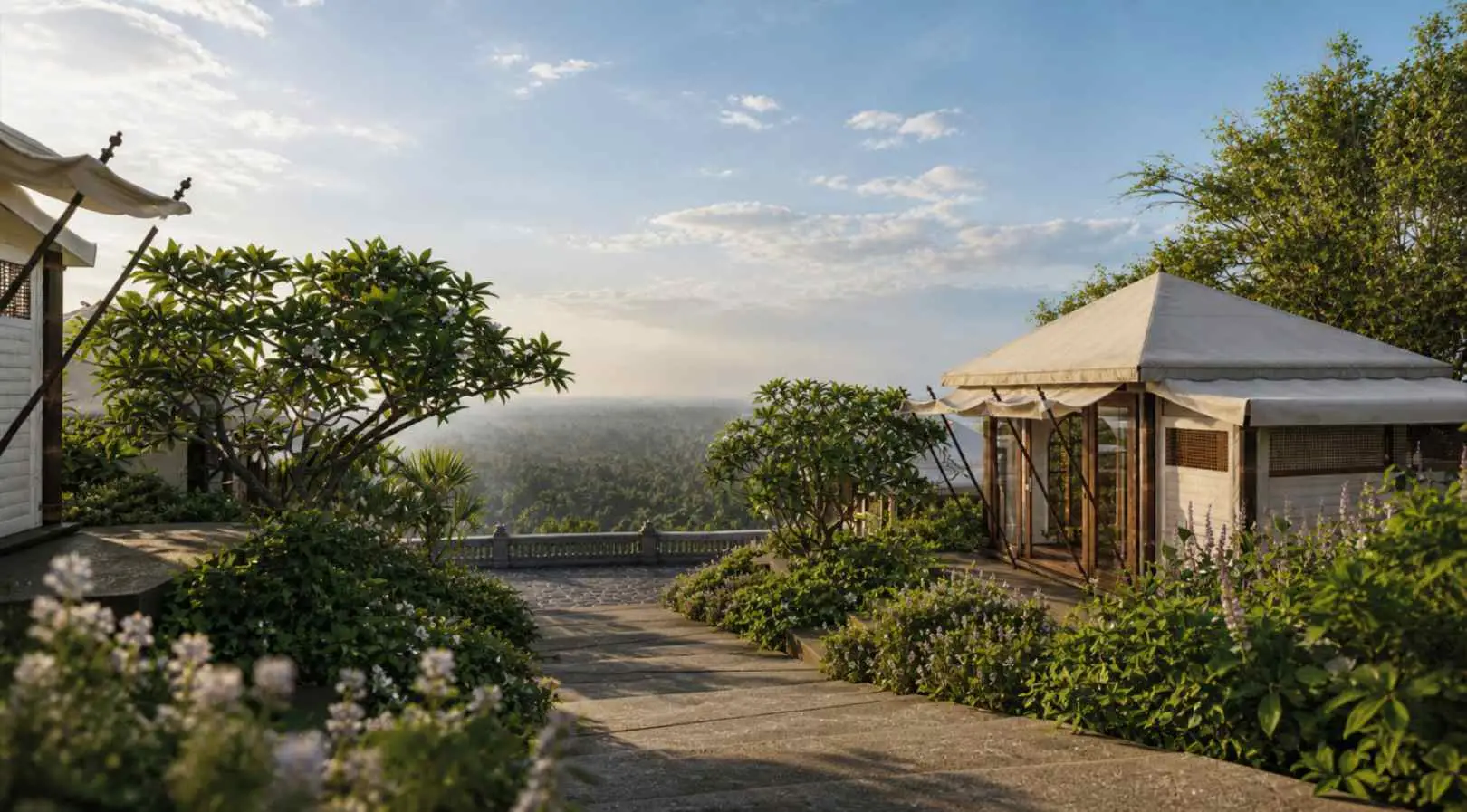
At CROSS Celesta, the farm-to-table brief from the operations team shaped not only plant selection but circulation routing and the spatial relationship between cultivation zones and the kitchen. The architectural decision to use tented villas — with their inherent philosophy of lightness and ecological sensitivity — gave the landscape team both a constraint and a permission: a permission to be wilder, less polished, more honest. The interior material palette — raw, textural, locally-rooted — speaks the same language that the landscape had already established outside.
“Collaboration in this project was not about a single decisive moment that changed direction. It was about every small decision being enriched by the shared vision of the entire team — resulting in an outcome that feels more whole, more contextual, and more coherent than any single discipline could have produced alone.”
— Alco Alisyaq, Principal, Swarna Hutama Loka
This is what distinguishes Swarna Hutama Loka as an integrated design practice: landscape is not completed after architecture is finished. It is developed alongside architecture, interior design, and artwork — as one coherent system of experience.
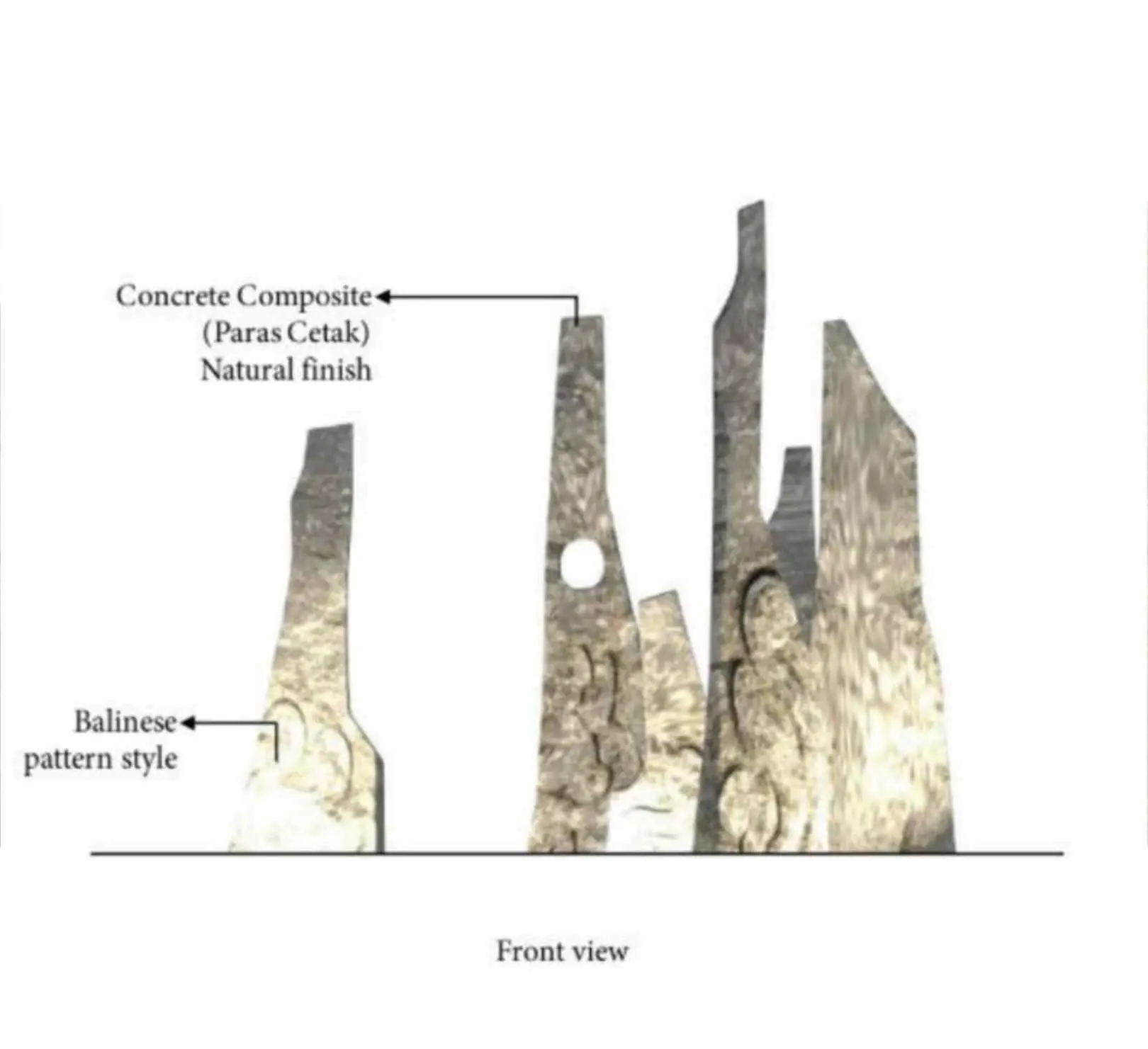
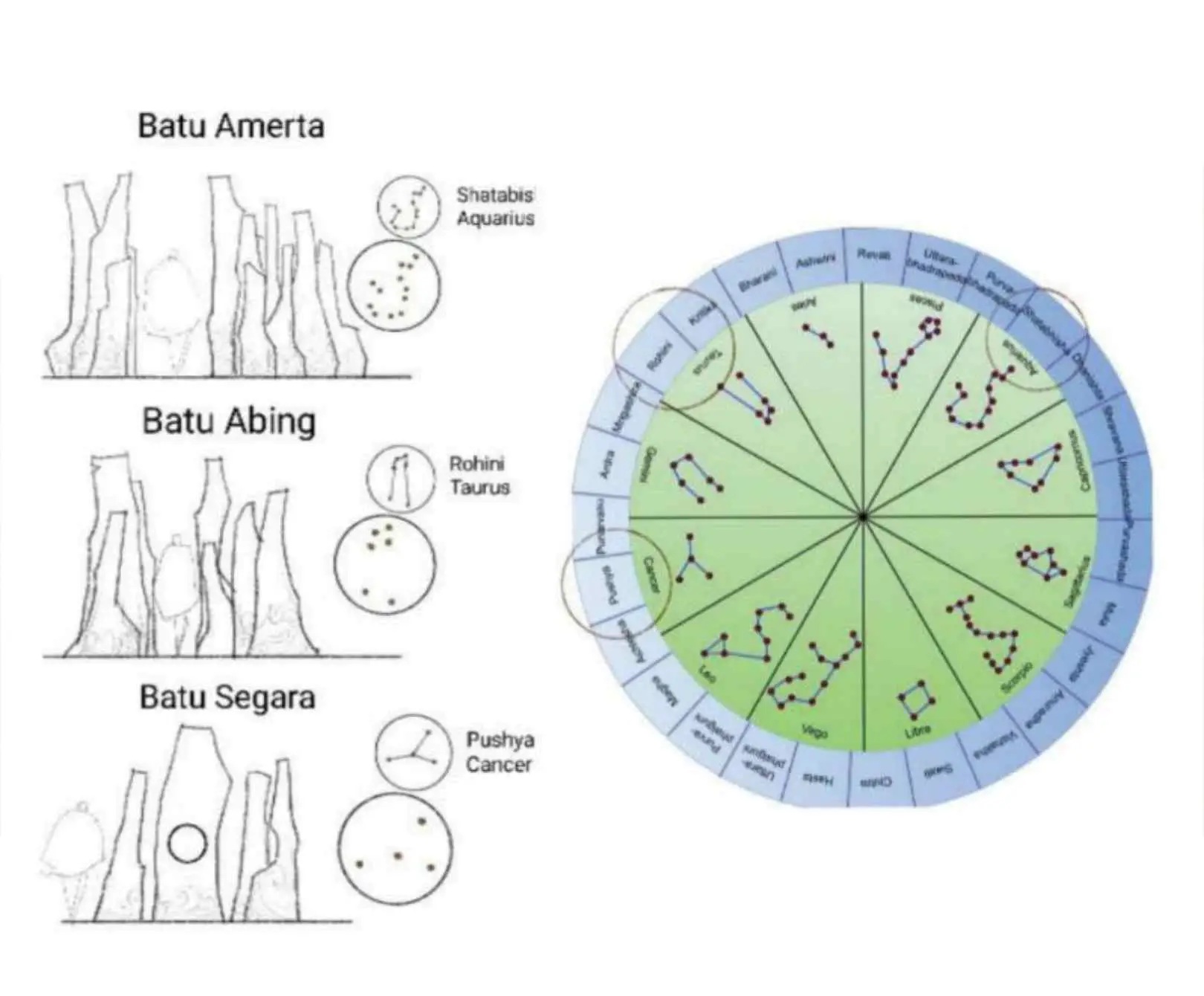
At every major intersection within CROSS Celesta, a stone sculpture marks the ground — not as ornament, but as orientation. The series, titled Spiritual Journey in Nusa Penida, Island of Pandita, translates the island’s constellation tradition into physical form: three pieces, three nakshatras — Batu Amerta (Aquarius, sacred water), Batu Abing (Taurus, the beloved star of Dewa Chandra meditated upon at Pura Puncak Mundi), and Batu Segara (Cancer, the teacher — echoing Penida itself, whose name means priest). Cast in paras cetak with Balinese pattern detailing, each sculpture rises from the landscape rather than standing apart from it.
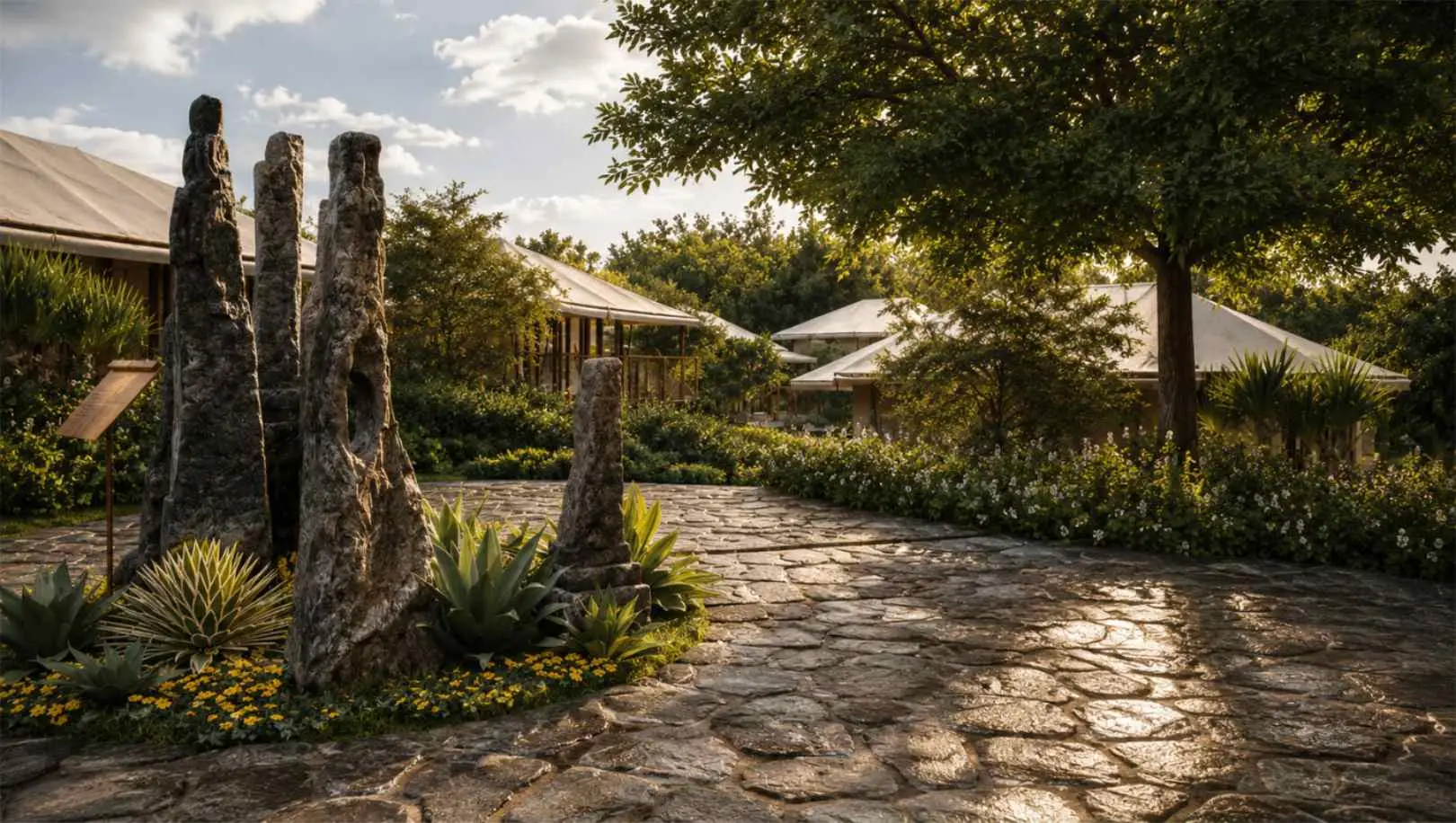
In Living Landscapes, artwork is not selected after design is complete — it is part of the same question: how should this place be experienced? The constellation sculptures slow the guest, shift the quality of attention, and connect the resort to a body of cultural knowledge that belongs to Nusa Penida long before hospitality arrived. For those who look closer, they open into an entire cosmological tradition. For those who simply pass through, they do their work quietly — marking where one space ends and another begins.
Frequently Asked Questions: Landscape Design for Resorts and Hotels
What is Living Landscapes, and how does it differ from conventional landscape design?
Living Landscapes is Swarna Hutama Loka’s approach to hospitality landscape design — one that understands landscape not as a decorative layer added at the end of a project, but as the foundation of guest experience. Rather than beginning with how a landscape should look, the process starts with how a place should be felt. Through the lens of Desa Kala Patra, every design decision responds to the specific character of the land, the dimension of time, and the operational realities of hospitality — producing a landscape that is fully integrated with the guest experience from check-in to check-out.
What should be considered when selecting a landscape design consultant for a resort or hotel?
The right landscape consultant for a hospitality project must understand far more than garden aesthetics. They need deep knowledge of site ecology, water management systems, species selection suited to the local climate, and the ability to integrate landscape design with the overall narrative and identity of the project. Experience specifically in resort and hotel projects — not only residential work — is a critical differentiator. The right partner begins their work long before architecture is complete, not after.
How significant is landscape design to the commercial success of a resort or hotel?
Landscape is the element that forms the first and last impression of every guest. It determines how people move through a property, how they perceive a destination, and how strongly the identity of the place is present in physical form. In luxury hospitality, strategically-designed landscape is among the most durable competitive differentiators — particularly because a living ecosystem takes years to mature and cannot be replicated quickly by competitors.
What distinguishes sustainable landscape design from conventional landscape design?
Sustainable landscape design for resorts and hotels means designing systems that work with local natural conditions rather than against them. This includes selecting plant species that are adaptive and require minimal external input, managing water through systems that make use of local rainfall patterns, specifying materials available in the local context, and minimising intervention in existing ecosystems. The result is a landscape that is more durable, lower in maintenance cost, more authentic as an experience — and one whose value compounds over time.
Does Swarna Hutama Loka undertake landscape design projects outside Bali?
Yes. Swarna Hutama Loka is an integrated design practice with hospitality project experience across Indonesia and the broader Asia-Pacific region. Through the Living Landscapes approach, grounded in Desa Kala Patra — responding to place, time, and condition with specificity — the practice adapts to diverse ecological and cultural contexts across destinations
Planning a resort or hotel project?
Swarna Hutama Loka is a design partner that works from concept through execution — integrating ecology, culture, and hospitality business strategy into one coherent design system.
Discuss your project with the Swarna Hutama Loka team: https://shl.asia/contact/
About the Project
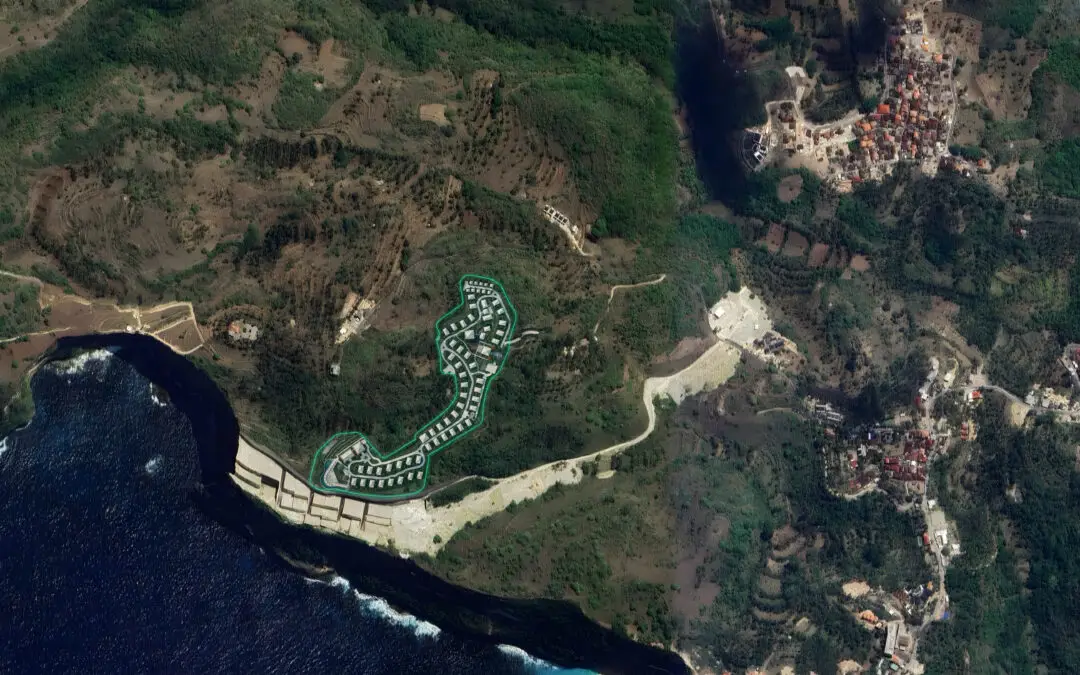
CROSS Celesta Nusa Penida is a luxury eco-resort currently under development above Kelingking Beach, Nusa Penida. The project spans 2.5 hectares and will feature 61 private tented villas, developed by PT Bali Penida Jaya, managed by Cross Hotels & Resorts, and designed in collaboration with Escape Nomade (architecture) and Swarna Hutama Loka (landscape design). Opening is scheduled for 2027.
About Swarna Hutama Loka
Swarna Hutama Loka is a Bali-based integrated design practice operating across architecture, landscape, interior design, artwork, and styling — exclusively within the hospitality sector. Through the Living Landscapes approach, the practice positions landscape not as a decorative element but as the foundation of guest experience: a living system that connects architecture with nature, and people with place. Swarna Hutama Loka operates as a strategic design partner — thinking not in maintenance cycles, but in generations.