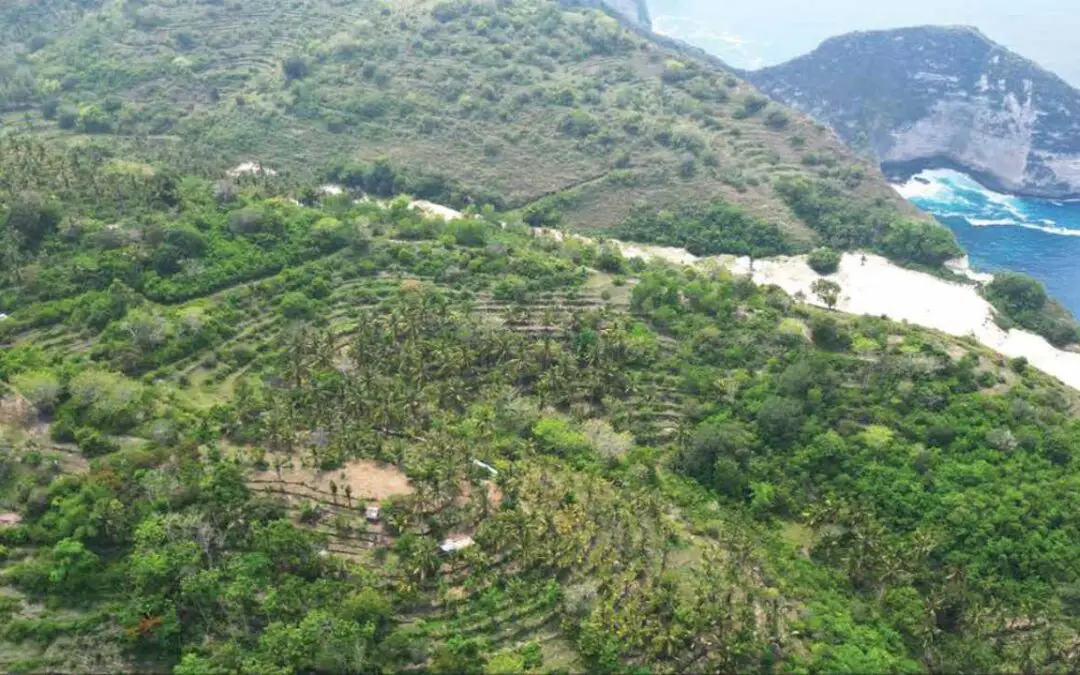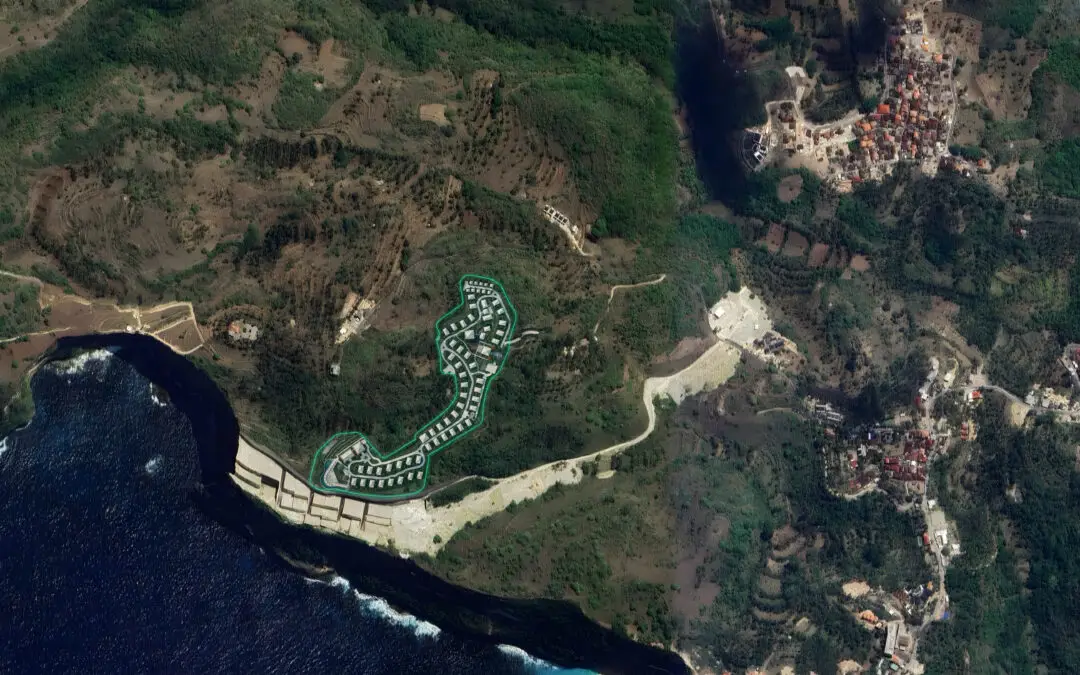
Nusa Penida, a jewel of Bali’s southeastern archipelago, is transforming. Once a quiet sanctuary known for its dramatic cliffs and sacred temples, the island is now experiencing a surge in popularity among international travellers, eco-conscious investors, and resort developers. With increasing economic activity and infrastructural expansion, Nusa Penida stands at a critical juncture: how can it preserve its rich cultural heritage while embracing a sustainable and prosperous future?
The Cultural Soul of Nusa Penida
Nusa Penida’s culture is not simply a backdrop for tourism—it is the island’s lifeblood. Its people maintain a deep spiritual connection to the land and sea, expressed through daily offerings, ceremonies, and shared rituals that date back centuries. These expressions of belief and gratitude are not limited to the temple courtyard; they permeate every corner of daily life, from the carving of sacred masks to the seasonal fishing bans dictated by ritual calendars.
Sacred Rituals and Identity
Baris Jangkang is a mesmerising sacred dance performed during significant temple anniversaries. Typically featured in the Ngusaba Dalem festival, which follows the Balinese lunar calendar, the dance involves men adorned in ritual white, carrying spears and moving with sharp precision. Accompanied by the hypnotic rhythm of gamelan music and the aromatic swirl of incense, Baris Jangkang is more than a performance; it is a conduit of spiritual energy and communal solidarity, embodying a fusion of heroism, devotion, and metaphysical balance.
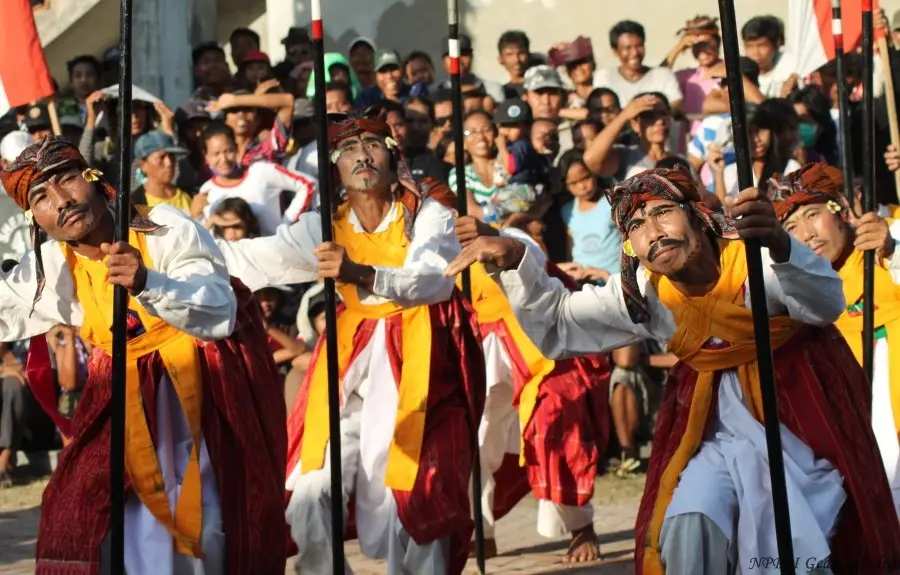 Photo Credit: Kemendikbud
Equally profound are the Ngaben Segara rites—ocean cremations—which fall under Bali’s broader Pitra Yadnya, or rites dedicated to ancestral spirits. While mainland Bali often performs land-based cremations, Nusa Penida’s rituals are uniquely tied to the sea. Families construct a bade (funerary tower) or pengawak (effigy) representing the deceased, then release it into the ocean with chants, offerings, and prayers. The sea is considered a sacred channel to the afterlife, a purifying and liberating force. Locals gather along the coastline in ceremonial attire, collectively sending off the soul in a powerful, solemn ritual.
Nyepi Segara, the “day of silence for the sea,” is another unique Penidan custom. On this day, all maritime activity halts. No fishing boats leave the shore, no swimming is allowed, and the sea is left undisturbed as a sign of reverence to Dewa Baruna, the sea god. This day of oceanic stillness highlights the locals’ respect for natural cycles and their spiritual guardians. It also offers an important model of ecological stewardship rooted in religious observance.
These ceremonies are not ornamental or performative. They shape the rhythm of life. They govern when land can be tilled, when homes can be built, and when boats can set sail. They dictate the timing of festivals and influence how locals engage with each other and with their environment. Any attempt to develop Nusa Penida must begin with a respect for this intricate web of ritual, cosmology, and ecological balance.
Temple Architecture and Spiritual Zones
Nusa Penida is home to sacred sites serving as religious venues and architectural chronicles of the island’s evolving spirituality. Among the most revered is Goa Giri Putri, a subterranean temple concealed behind a narrow limestone opening. Pilgrims must crouch and crawl through the narrow fissure before emerging into an expansive cave bathed in candlelight and incense. Here, Hindu and Buddhist elements coexist, echoing centuries of spiritual syncretism.
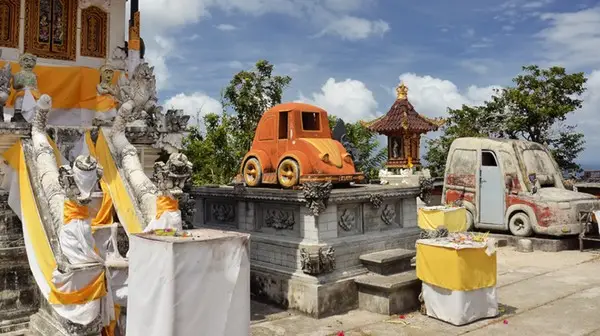 Photo Credit: Visit Bali
Another significant temple is Pura Paluang, affectionately known as the “Car Temple.” The site features two shrines shaped like old automobiles, believed to have appeared in a priest’s vision. Locals say these forms represent vehicles for the gods. This whimsical yet deeply spiritual site illustrates how tradition evolves in conversation with imagination and contemporary life. These temples serve as more than religious symbols; they are spiritual anchors, providing both physical and metaphysical orientation to the people of Nusa Penida. Protecting these sites is not just about preservation but about safeguarding the integrity of the island’s cultural compass.
Strategies for Sustainable Cultural Stewardship
Community-Led Development
True preservation begins with the people. Developers, investors, and planners must collaborate closely with local leaders and villagers. Involving the community ensures respect for traditional values and fosters a sense of ownership and long-term stewardship. Cultural preservation is most effective when locals are active participants, not passive observers. This includes employing local artisans, integrating traditional building techniques, and respecting seasonal and ceremonial calendars in project timelines.
Adaptive and Contextual Architecture: Building with the Island, Not Upon It
Adaptive and contextual architecture is more than an aesthetic choice—it is a responsibility. Designing with sensitivity to Nusa Penida’s natural terrain and cultural context enables developments to honour the land rather than dominate it. By incorporating Balinese architectural principles such as open-air layouts, symbolic spatial orientation, and the use of natural, locally sourced materials, modern resorts can achieve elegance while remaining ecologically and culturally harmonious.
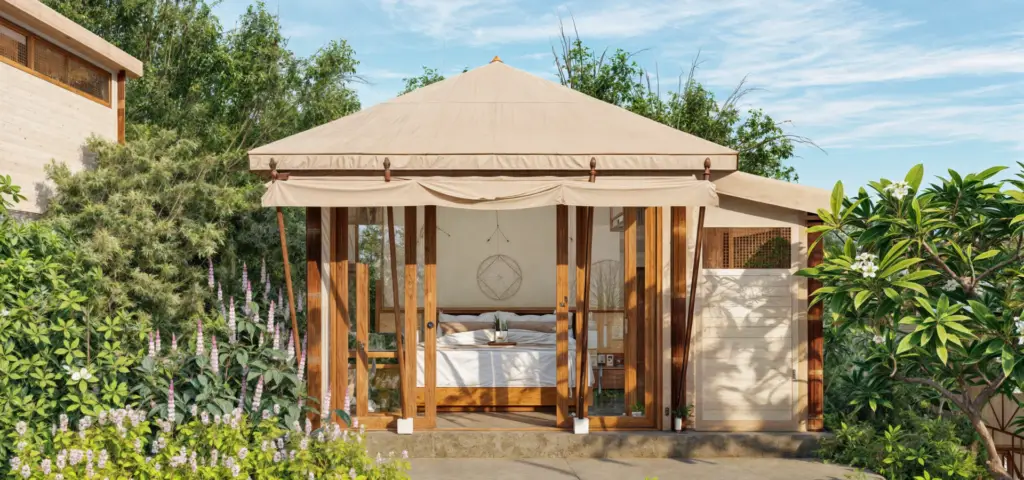
A striking embodiment of this ethos is Escape Nomade, a design house renowned for its elegant, sustainable tented villas. These semi-permanent structures are gently elevated above the forest floor, causing minimal environmental disruption and allowing for potential relocation. But more than functionality, they offer guests an immersive experience—a chance to feel the ocean breeze ripple through their rooms, to fall asleep to the rustle of palms, and to rise to the rhythm of the island itself. Inspired by Balinese wantilan (open-air pavilions), Escape Nomade’s “living without walls” ethos allows guests to connect with the environment like traditional communal spaces.
Temple Zoning and Sacred Space Protection
Many of Nusa Penida’s most sacred temples are located in places that, to the untrained eye, might seem perfect for development: cliff edges, coastal inlets, lush hilltops. But for the local Balinese, these striking landscapes hold a far deeper meaning. They are not just beautiful—they are sacred. These are the spiritual thresholds of the island, places where the material world meets the divine. Each stone, tree, and breeze carries centuries of ceremony, reverence, and unseen connection.
Protecting these sacred spaces requires more than good intentions—it demands deep cultural understanding and respectful planning. Temple zoning regulations must be thoughtfully upheld, with clearly defined buffer zones that are anything but arbitrary. These zones maintain spiritual sightlines, provide space for processions, and ensure that rituals can unfold as they have for generations.
At CROSS CELESTA Nusa Penida, the landscape is not merely shaped—it is honoured. Designed in collaboration with SHL Asia, the resort’s outdoor realm is envisioned as a sacred journey, one that resonates with the island’s spiritual, ecological, and cultural DNA.
“For CROSS Celesta Nusa Penida, we don’t just design spaces—we listen to the land. Every step is about respecting what’s already here and ensuring it stays meaningful for generations.” — SHL Asia
This deep cultural sensitivity is carried through SHL Asia’s landscape design. Inspired by pilgrimage trails and colonial-era expeditions, garden pathways evoke the early researchers who first traversed Nusa Penida with reverence, not conquest. These trails meander gently, inviting contemplation and discovery, echoing the sacred rhythms of the land.
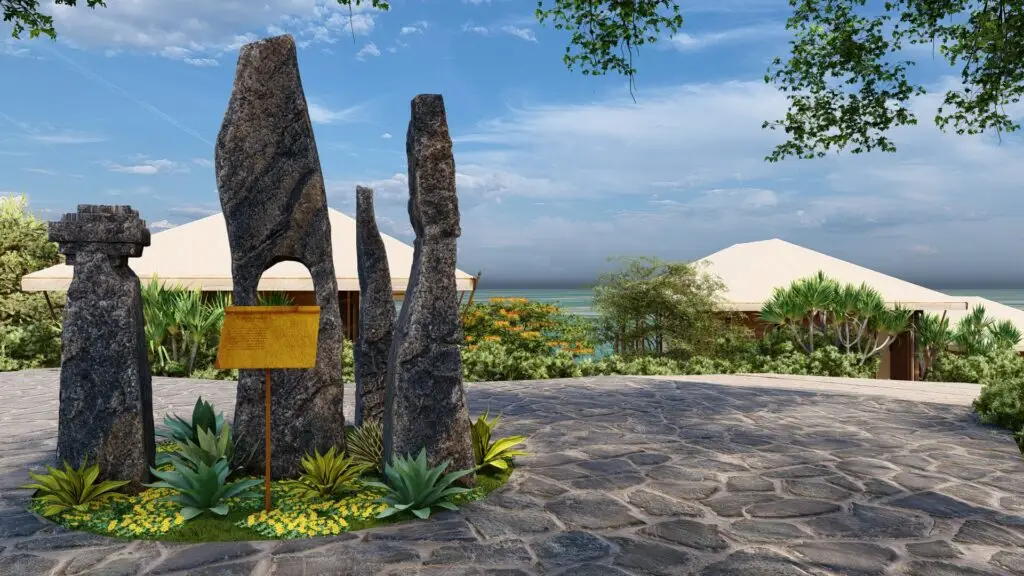
The centrepieces of this spiritual landscape are three monumental artworks: Batu Amerta, Batu Segara, and Batu Abing. These stones are more than sculptures—they are contemporary symbols of Tri Murti, the Balinese trinity of creation, preservation, and transformation. Crafted from locally sourced limestone—the material that gives Nusa Penida its nickname, Pulau Kapur (Limestone Island)—these stones are placed at key junctions of spiritual and physical movement. Each marks a threshold: a transition, reflection, or renewal moment.
The landscape is further anchored by a planting palette rich in cultural meaning. Trees and shrubs such as moringa, frangipani, and banyan are selected not only for their resilience and beauty, but also for their ritual and medicinal value. Moringa, for example, is believed to repel negative energy and is often planted at the corners of sacred compounds. Here, it stands as guardian and giver, echoing the protective nature of sacred land.
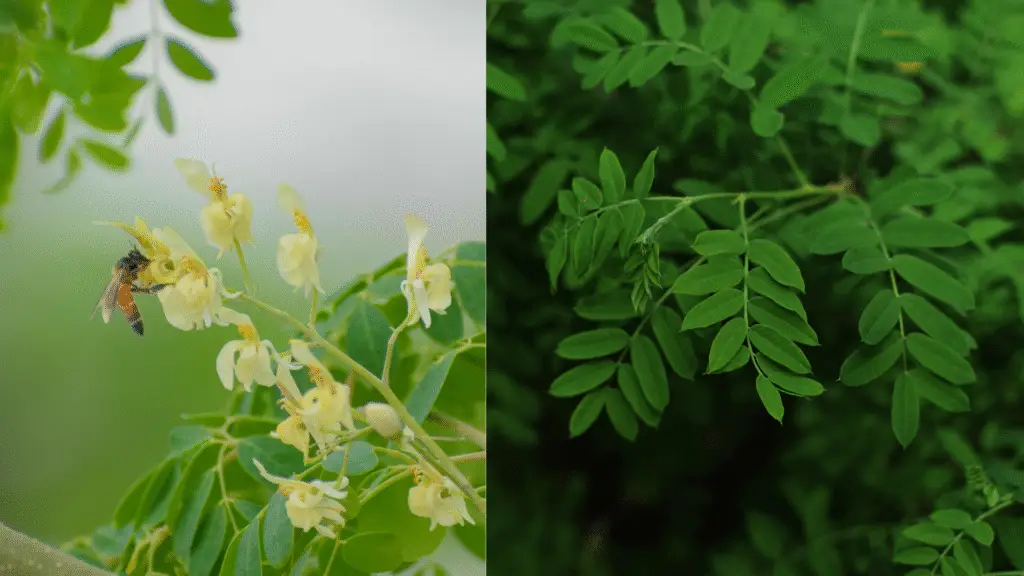
In a time when development often threatens sacred ground, CROSS CELESTA Nusa Penida chooses a different path—to listen, align, and protect. Here, luxury does not displace tradition; it elevates it. This is not just sustainability—it is sacred stewardship.
Cultural Sustainability in Investment Models
Investment in Nusa Penida must transcend the traditional pursuit of short-term profit. True success here is measured in financial returns and the preservation and celebration of culture. Cultural sustainability should be seen as a core metric woven into the DNA of each development. This means more than respecting local traditions; it means actively supporting them.
Responsible investment must enrich the cultural fabric of the island. From hiring and training local talent to contributing to the conservation of heritage sites, it is about creating models where prosperity is shared and development becomes a force for community empowerment, not displacement.
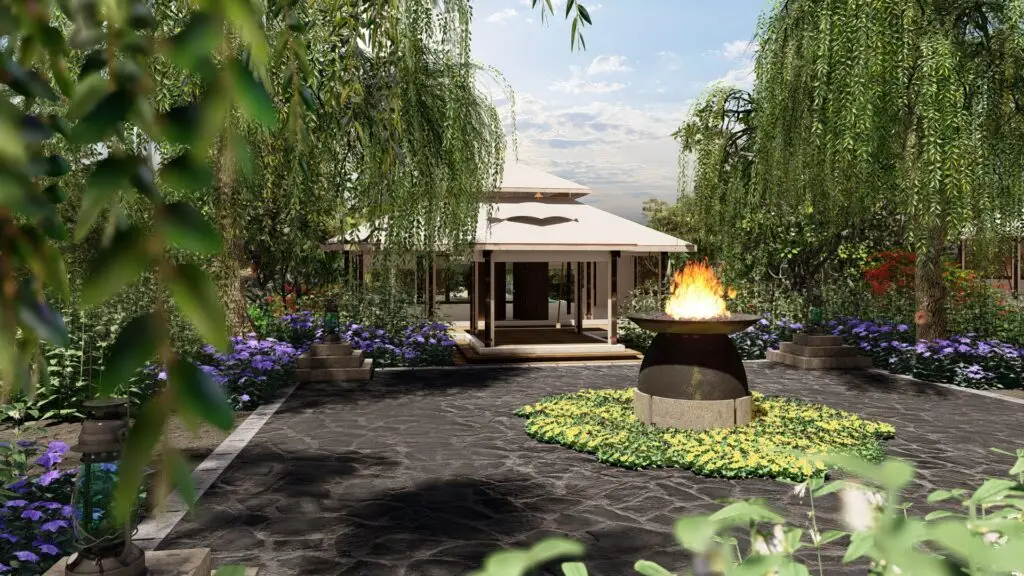
In collaboration with Escape Nomade and SHL Asia, CROSS CELESTA Nusa Penida presents a blueprint where luxury aligns with locality, and sustainability is deeply spiritual. Every design decision, landscape element, and business practice is guided by the belief that development should nurture resilience, not dilute identity. Here, investment becomes legacy—one that honours the soul of Nusa Penida while inviting the world to experience it with reverence.
The Way Forward: A Sacred Commitment to Place
Nusa Penida stands at a transformative crossroads. As waves of interest from global travellers and investors reach its shores, the island must navigate an economically vibrant and culturally grounded future. The path forward lies not in choosing between development and tradition, but in finding a thoughtful balance that allows both to thrive. This requires a profound respect for the land, its people, and the ancestral wisdom embedded in its rituals, architecture, and daily rhythms.
Through thoughtful strategies like temple zoning, contextual architecture, and cultural sustainability, developments should demonstrate what responsible, reverent investment can look like. With guidance from SHL Asia and Escape Nomade, CROSS CELESTA Nusa Penida integrates luxury with localism, design with devotion, and business with benevolence—setting a new precedent for development as a form of cultural stewardship.
An Invitation to Invest with Purpose
CROSS CELESTA Nusa Penida is now open for investment. This is more than a resort—it is a regenerative vision where eco-luxury and cultural integrity coexist. Join us in shaping a legacy of meaningful growth and timeless beauty. Visit https://crosscelesta.com/invest/ to explore the opportunity.