For decades, Bali has been the heartbeat of Indonesia’s tourism economy. It is famed for its lush landscapes, sacred temples, and cultural tapestry that draws millions from around the world. Yet, while southern Bali flourished, the northern region remained relatively untouched by the tourism boom. That narrative is now poised to change dramatically.
With the official green light from the Indonesian President and a $3 billion foreign investment secured, the long-anticipated North Bali International Airport is finally moving into execution. Spearheaded by PT BIBU Panji Sakti, this ambitious infrastructure project signals a major shift, not just in how travellers will access Bali, but in how the island’s economy will evolve in the coming decades.
As a resort that champions sustainable investment in the island’s future, CROSS Celesta Nusa Penida sees the North Bali International Airport as more than a construction milestone. It’s a strategic turning point that aligns with our shared vision for balanced, responsible, and inclusive development across Bali.
Let’s explore the layers of this transformative development.
A Crisis at the Gate: The Tipping Point of Bali’s Southern Gateway
Every journey to Bali begins with the same promise of paradise, peace, and escape. For most, that promise begins the moment the plane descends over the glittering coastline into Ngurah Rai International Airport, nestled in the island’s bustling southern corridor. But for millions of travellers arriving today, that promise is too often delayed.
Ngurah Rai, built to welcome 15 million passengers a year, now handles over 19 million. And it shows. The once smooth arrivals have given way to long queues at immigration, overcrowded baggage claims, and the unmistakable hum of a terminal stretched beyond its limits.
Outside, the situation continues. The roads connecting the airport to Bali’s tourism hotspots, such as Kuta, Seminyak, Canggu, Ubud and Denpasar, are choked with traffic from dawn till dusk. A journey that should take 15 minutes can stretch into an hour. And yet, expansion is not a simple fix. The airport is landlocked by dense development, flanked by protected coastal zones, and bordered by sacred temples that cannot and should not be moved. There is no space to build out. No room to breathe.
The Vision: Unlocking Northern Bali’s Untapped Potential
As Bali’s southern region grapples with the strains of overcrowding and infrastructural fatigue, the solution lies not in expansion but in evolution. The year 2025 marked a pivotal turning point in that journey. After more than a decade of studies, debate, and political negotiation, the North Bali International Airport (NBIA) was granted official approval by the President and formally integrated into Indonesia’s National Medium-Term Development Plan (RPJMN) 2025–2029, through the issuance of Presidential Regulation Number 12 of 2025.
At its core, the North Bali International Airport seeks to address a long-standing imbalance. While the south of the island has blossomed into a global tourism powerhouse, northern Bali remains largely untouched by this prosperity, rich in natural beauty, yet disconnected from the economic boom. The issue is not potential, but access. That is the challenge PT BIBU Panji Sakti, the private developer behind the NBIA, aims to solve.
PT BIBU Panji Sakti, a privately owned Indonesian company with expertise in civil engineering and infrastructure development, has secured funding and feasibility approvals. They envisioned the NBIA not merely as an airport, but as the centrepiece of an integrated regional transformation.
The Vision in Motion:
- 600 hectares of reclaimed offshore land for the airport terminal and three runways, engineered with minimal land impact and zero displacement of sacred sites.
- 300-hectare Aerosity, a dynamic commercial zone adjacent to the airport, is tailored for retail, hospitality, logistics, and free trade operations.
- 2,800-hectare Aerotropolis, a smart city designed with input from local communities, offering sustainable housing, resorts, technology parks, and cultural hubs.
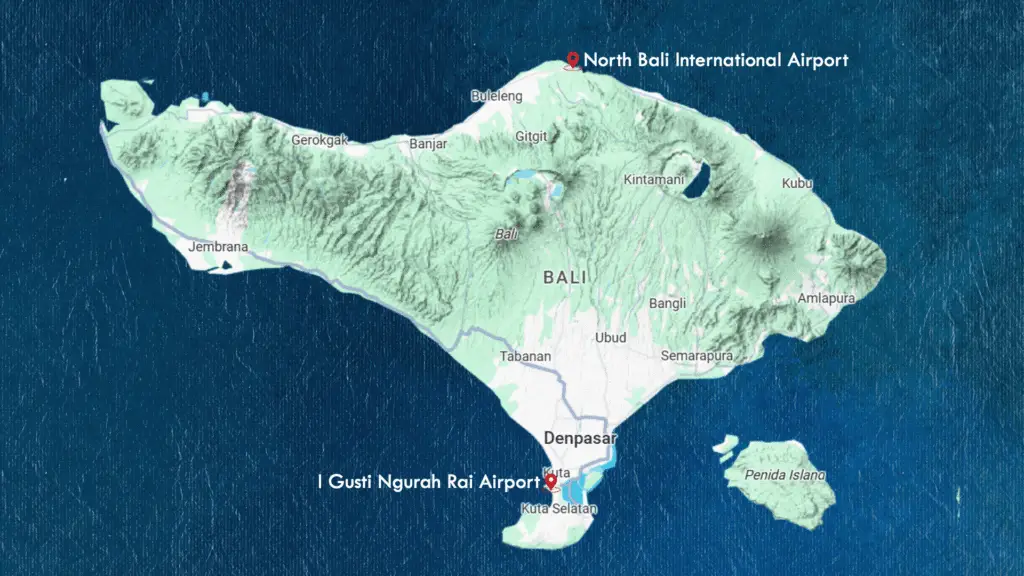
Built offshore along the northern coast in Buleleng Regency, the North Bali International Airport is designed to connect Bali to the world in a new, equitable way. It’s an ambitious bid to decentralise tourism, diffuse economic opportunities, and revitalise the North, without disturbing the island’s spiritual and environmental fabric.
For Bali, this represents more than just a redistribution of air traffic. It lays the groundwork for a more balanced, inclusive, and sustainable future; one in which regions like Buleleng are no longer on the periphery of development, but positioned at the centre of the island’s next great chapter.
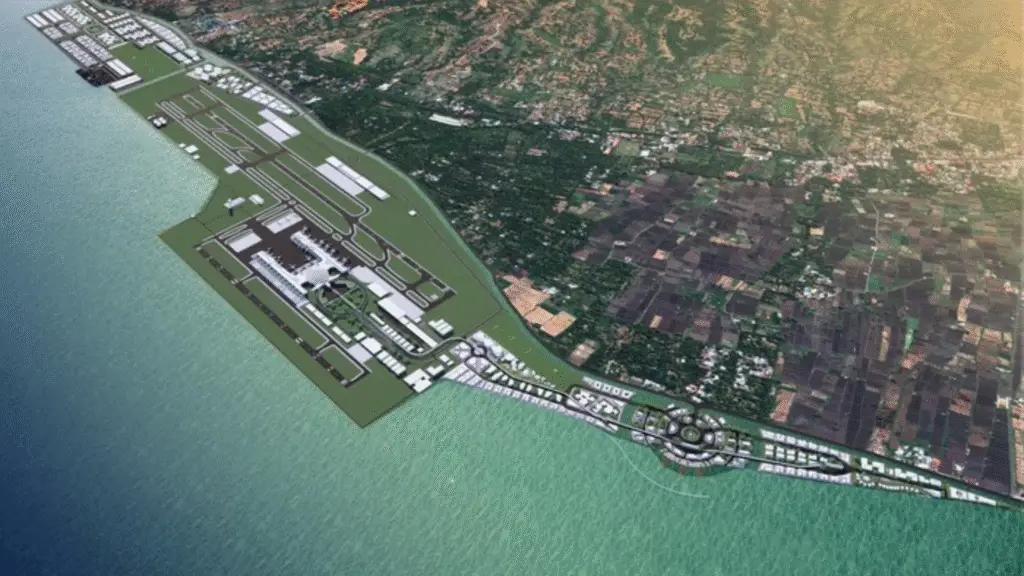 Photo Credit: PT BIBU
Financing and Foreign Investment: A Strategic Commitment
In November 2024, a Framework Agreement (HOA) was signed in Shanghai between PT BIBU Panji Sakti and ChangYe Construction Group Corporation, solidifying a monumental US$3 billion investment. Earlier, a Memorandum of Understanding (MoU) had been signed in Beijing, marking the beginning of a partnership that would fully fund the project without using any Indonesian state budget (APBN).
This bold, privately funded initiative underscores the investor confidence in the project’s long-term viability. The financing structure is set as a loan to be repaid by PT BIBU, making it a low-risk proposition for the Indonesian government, but a high-stakes, high-reward venture for the developers and partners.
Beyond this primary investment, discussions are actively underway with potential investors from the Middle East and Australia to support other key components of the broader Aerotropolis and Aerosity masterplan. These include areas such as hospitality infrastructure, logistics, renewable energy, and commercial real estate, critical elements that will support the airport’s long-term ecosystem and regional development goals.
Presidential Support and Local Endorsement
“This project has garnered unwavering support from all 13 royal houses and traditional leaders across Bali,” stated Erwanto Sad Adiatmoko Hariwibowo, Founder and CEO of PT BIBU Panji Sakti, during his appearance on the Helmi Yahya Bicara podcast.
All 13 royal houses and traditional leaders of Bali have pledged their support, offering cultural legitimacy that is rarely seen in infrastructure projects of this magnitude. Their endorsement ensures smoother integration with local customs and traditions, a critical factor in Balinese society.
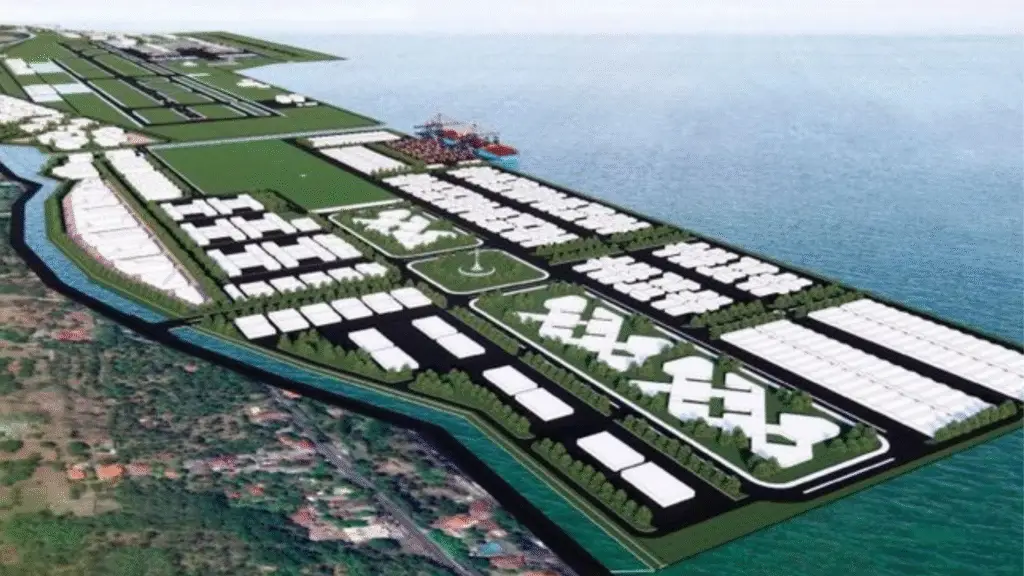 Photo Credit: PT BIBU
Strategic Location and Design: Respecting Culture and Nature
What sets the North Bali International Airport (NBIA) apart is its pioneering offshore construction model, a bold engineering solution with deep cultural and ecological consideration. The airport will be developed entirely at sea, covering approximately 900 hectares. Far from being a mere technical feat, this approach reflects a profound respect for Bali’s sacred geography and environmental sensitivities.
Northern Bali is home to a wealth of holy temples and spiritual landmarks, many of which hold irreplaceable cultural significance. By situating the airport offshore, the project ensures that no religious sites are disturbed and that local spiritual practices remain untouched.
Simultaneously, the location directly addresses the issue of coastal abrasion that has long affected the region. The design integrates with broader marine conservation and shoreline reinforcement efforts, prioritising the protection of ecosystems while enabling responsible development.
From a functional perspective, the airport will feature three runways, with the third specifically designed to accommodate seaplanes. This inclusion is particularly forward-thinking, as it supports the growth of marine tourism and enables the direct export of fish and marine products from Eastern Indonesia, a significant step toward strengthening Bali’s role in regional logistics and commerce.
The North Bali International Airport is being developed under the guiding principles of being “technology-friendly, environmentally friendly, and culturally friendly”, ensuring that progress does not come at the expense of the island’s heritage or natural balance.
A Project with Scale and Vision
According to PT BIBU’s projections, the airport is expected to create 200,000 jobs during construction, and up to 500,000 new jobs once operational. This will not only stimulate North Bali’s local economy but also attract a wave of real estate development, hospitality ventures, and service industries.
The airport is designed to serve up to 10 million passengers annually once completed. With seamless connections via a new Denpasar to North Bali toll road, built under the same presidential regulation (Perpres No. 12), the flow of tourists across the island will be rebalanced.
Overcoming Challenges and Controversies
No transformative project comes without scrutiny. While the NBIA is gaining momentum, several challenges persist:
1. Permitting and Bureaucracy
While PT BIBU has completed feasibility and AMDAL (Environmental Impact Assessment) studies, key permits such as the Location Permit (Penlok) are still pending from the Ministry of Transportation. Environmental clearances from the Ministry of Environment and Forestry and the Ministry of Maritime Affairs and Fisheries are also in process.
2. Supporting Infrastructure
Local leaders stress the importance of the concurrent development of roads, rail, and transport access. A world-class airport without seamless ground connections could fall short of its full potential. PT BIBU has acknowledged this, emphasising alignment with government and private-sector partners to execute supporting infrastructure.
4. Community Engagement
The project has taken the admirable approach of leasing land rather than acquiring it to ensure that no residents are displaced and that sacred sites remain untouched. Still, meaningful involvement of local communities will be crucial for long-term social harmony.
The Timeline Ahead
The North Bali International Airport timeline is ambitious:
- 2025: Groundbreaking scheduled to commence
- 2027 (End): First runway expected to be operational
- 2028–2029: Phased roll-out of Aerosity and Aerotropolis components
As investor interest in northern Bali, such as Singaraja and Lovina, the new airport will play a pivotal role in shortening travel time, elevating the property market, and enhancing guest experience.

The North Bali International Airport is more than a new runway; it’s a metaphor for balance. Balance between the north and the south. Between economic growth and cultural preservation. Between private investment and public goods.
At CROSS Celesta Nusa Penida, we’re excited about what the future holds for Bali. It’s encouraging to see other regions gaining the opportunity to attract high-quality tourism and benefit from much-needed infrastructure development. As always, we remain committed to delivering thoughtful, responsible hospitality that honours the spirit of the island while embracing its evolving landscape.
For our investors, the implications are clear: the runway is being laid, not just for planes, but for long-term prosperity.
Discover more about sustainable investment opportunities at CROSS Celesta Nusa Penida. Contact us today and secure your stake in Bali’s next frontier.