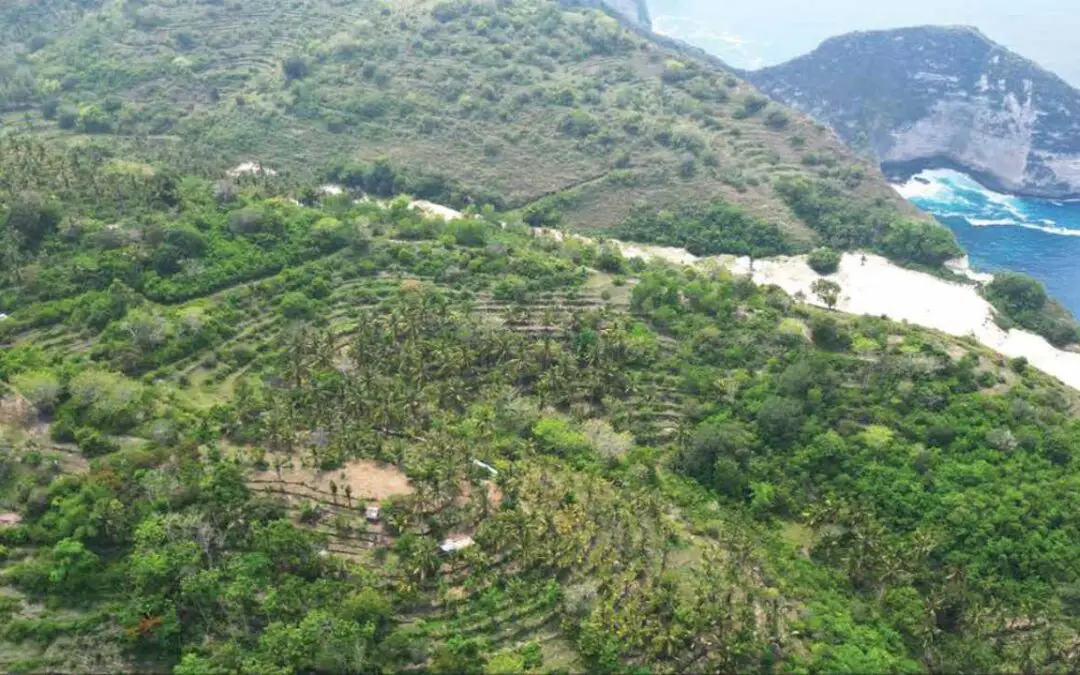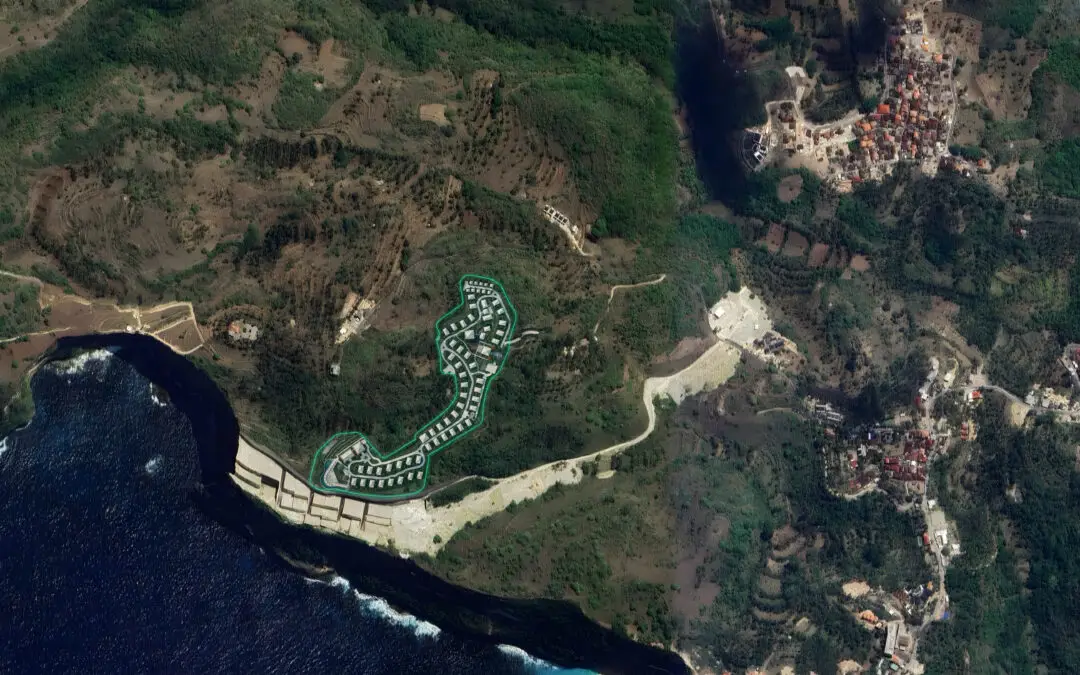
In a world increasingly defined by concrete sprawl and environmental degradation, a quiet yet profound architectural revolution is taking place—one that doesn’t build to dominate but to harmonise. At the heart of this transformation is
Escape Nomade, the globally renowned luxury tent architecture studio, and their recent collaboration with CROSS Celesta Nusa Penida, a groundbreaking eco-resort development poised to redefine the real estate and hospitality landscape in Bali.
While the term “eco-luxury” has become a buzzword in modern travel, few embody its essence with the authenticity, clarity, and technical mastery of Escape Nomade. Their philosophy—Living Without Walls—is more than a tagline; it is a design ethos born from founder Anneke van Waesberghe’s spiritual and aesthetic revelations while living in Japan and Southeast Asia. The aim is simple, yet profound: to create open, natural spaces that connect us back to what matters.
A Philosophy Rooted in Simplicity, Sustainability, and Luxury
At the core of Escape Nomade’s architectural identity lies a quietly revolutionary triad: simplicity, sustainability, and luxury. These are not buzzwords, but foundational principles that shape every project from concept to completion. Each tented space they create is far more than a structural solution—it is a meditative response to place, a form of design that breathes with its environment and whispers rather than shouts.
Where conventional architecture often seeks to impose itself on the landscape—separating inside from outside, enclosing people in climate-controlled boxes—Escape Nomade seeks to dissolve those boundaries entirely. Their tents invite the natural world in, using breathable canvas in place of rigid walls and raised modular platforms instead of concrete slabs. The result is not a building in the traditional sense, but a living structure: one that moves with the wind, adapts to light, and lets the chorus of the landscape become part of the guest experience.
The idea of “building lightly” is another cornerstone of this ethos. It is a design approach rooted in restraint, respect, and responsibility. To build lightly is to disturb as little as possible—to avoid pouring foundations that scar the earth, to forego the machinery that flattens terrain, and to sidestep the energy-intensive processes that characterise traditional construction. Instead, Escape Nomade opts for elevated designs that adapt to the contours of the land, with minimal ground impact and a construction process that reduces noise, dust, and emissions. For islands like Nusa Penida, where biodiversity is fragile and the landscape sacred, this approach is not just ideal—it is essential.
Yet for all their ecological sensitivity, these spaces do not compromise on comfort. On the contrary, they offer a sense of luxury reimagined: a pared-back, effortless elegance that comes not from ornate decoration or high-tech features, but from proportion, light, texture, and flow. The absence of walls is compensated by thoughtful zoning and spatial rhythm. Natural materials such as FSC-certified teakwood imbue the interiors with warmth and tactility. Carefully placed openings frame views like living artworks, offering a different kind of opulence—one measured in moonlight, breeze, and birdsong, rather than marble, gold, or chandeliers.
This deliberate balance between natural immersion and refined living is what sets Escape Nomade apart. It allows them to serve not only the guest, but also the land, the community, and the future. Their philosophy is one of longevity without permanence, elegance without excess, and intimacy without enclosure.
By working with the elements rather than against them, Escape Nomade challenges us to reconsider the purpose of architecture itself. In their hands, a tent is no longer a temporary refuge, but a lasting statement—one that affirms our place within nature, rather than above it.
The Appeal of Tent-Based Architecture for Modern Investors
In a sector often obsessed with permanence and scale, Escape Nomade offers a model that is modular, scalable, and surprisingly enduring. The core tented structure is designed to last over 25 years, even in demanding tropical environments.
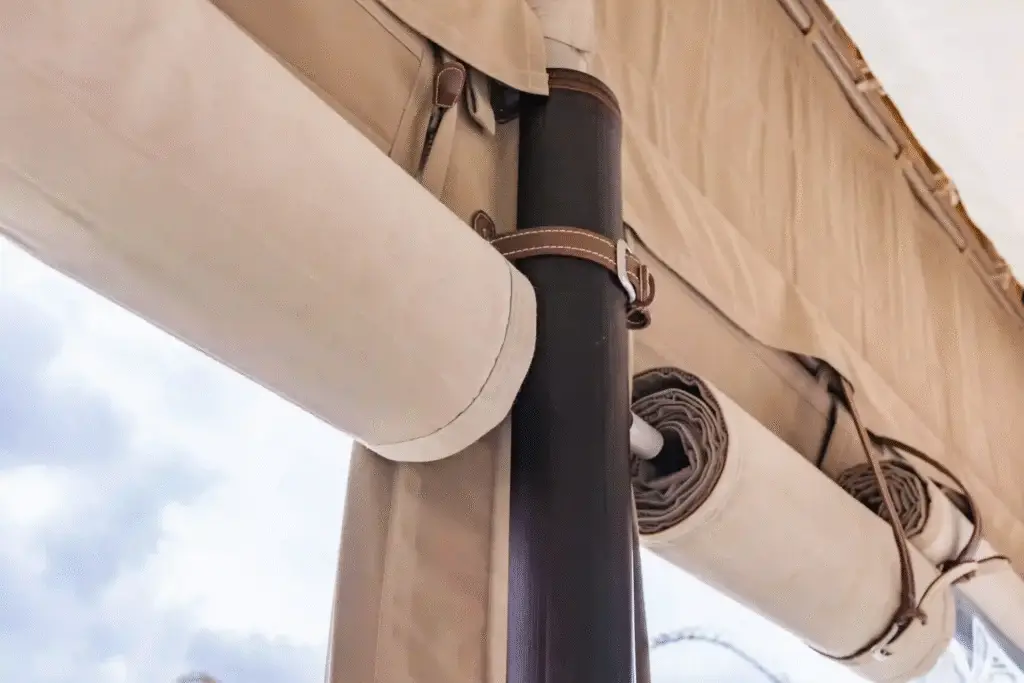 The refined material palette seen in every tented villa reflects Escape Nomade’s commitment to excellence
Key components—such as canvas, zippers, and fittings—require replacement every 6 to 8 years, but these can be done modularly, ensuring minimal operational disruption.
This translates directly into investor appeal. The low environmental and financial cost of maintenance is one benefit; the high guest retention and brand loyalty are another. According to Escape Nomade, many guests who stay in their tents eventually choose to become clients themselves, turning fleeting experiences into lifestyle commitments.
Escape Nomade’s modular design is not merely aesthetic—it’s operationally smart. Components can be replaced or upgraded piece by piece, without specialist contractors. Elevation strategies mitigate flooding, while breathable canvas reduces dependency on artificial ventilation. All of these features contribute to long-term ROI by lowering utility costs and enhancing guest comfort.
Escape Nomade by the Numbers
With a remarkable portfolio of over 350 completed projects across more than 55 countries, Escape Nomade has established itself as a pioneering force in the realm of sustainable luxury architecture. This global footprint is not merely a measure of scale, but a testament to the brand’s consistent ability to adapt its timeless design philosophy across diverse climates, cultures, and client needs.
Many guests report a profound emotional connection to Escape Nomade’s spaces—drawn by their sense of openness, calm, and harmony with nature. As a result, the guest return rate is remarkably high, with a growing number of visitors converting into buyers, often choosing to invest in their own tented retreats after a single stay.
This pattern of emotional resonance and brand loyalty has proven invaluable for hospitality operators and developers alike. The company’s partner portfolio spans from intimate boutique resorts to globally recognised hotel chains, offering both flexibility and prestige. Taken together, these figures do not merely highlight a successful business model; they speak to a design framework that is financially sound, ethically principled, and aesthetically timeless—a rare trifecta in today’s rapidly evolving hospitality landscape.
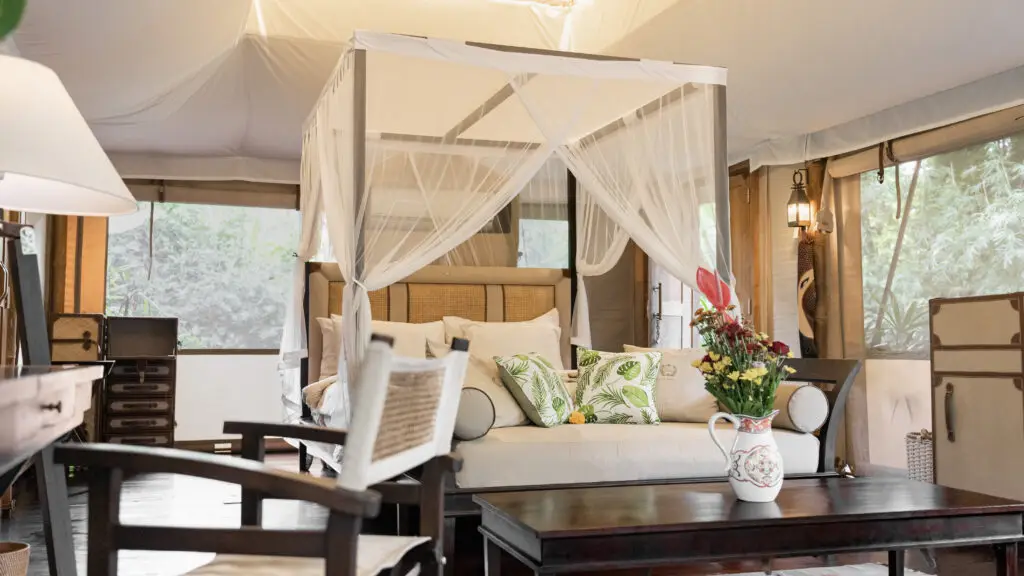 Tented villa at Sebatu Sanctuary, Bali
Transparency will be paramount. Guests will want to know the provenance of materials, the social impact of their stay, and the footprint they leave behind. Greenwashing will be quickly exposed in a world where digital access makes scrutiny instantaneous. Brands that do not practice what they preach will lose trust—and ultimately, market relevance.
In this context, Escape Nomade’s architectural approach becomes a compelling blueprint for the future. Their tented structures are low-impact, high-emotion, and deeply intelligent—not only in their environmental logic but in their ability to stir the soul. They do not impose upon the land, but rather flow with it, adapting to light, wind, and terrain. As a result, they offer a luxury experience that is both deeply personal and profoundly ethical.
Ultimately, Escape Nomade’s contribution to the future of sustainable hospitality lies not just in what they build, but in what they represent—a shift from architecture as object, to architecture as experience, story, and stewardship. In their hands, tents are not temporary; they are timeless sanctuaries that remind us what it means to live lightly, love the land, and redefine luxury for a generation that demands better—from the places they visit, and from themselves.
Real-World Performance and Case Studies
Escape Nomade’s architectural philosophy is not merely conceptual—it is deeply tested in real-world hospitality environments, across continents, climates, and market conditions. The company’s tents have been deployed in a variety of contexts—from intimate wellness retreats and wedding venues to large-scale hospitality developments and residential estates—each time proving their adaptability, longevity, and emotional resonance with guests.
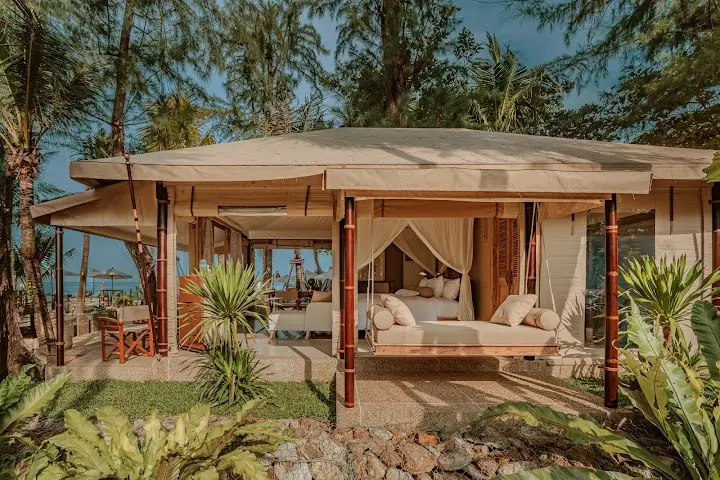
Twinpalms Tented Camp in Bangtao, Phuket
One of the most compelling examples is the Twinpalms Tented Camp in Bangtao, Phuket. Originally conceived as a small-scale experiment to test the local luxury market, the project began with just a handful of tents. However, it quickly became clear that the concept struck a chord with travellers seeking tranquillity and connection to nature without compromising on comfort. As demand surged, the owner scaled up the property to nearly 30 tented units, and within a short period, room rates increased by over 10%. This not only demonstrated the commercial viability of Escape Nomade’s designs but also their scalability in response to evolving market needs. The success has inspired the same owner to explore the next phase—a permanent tented residence concept, affirming the long-term confidence in Escape Nomade’s architectural model.
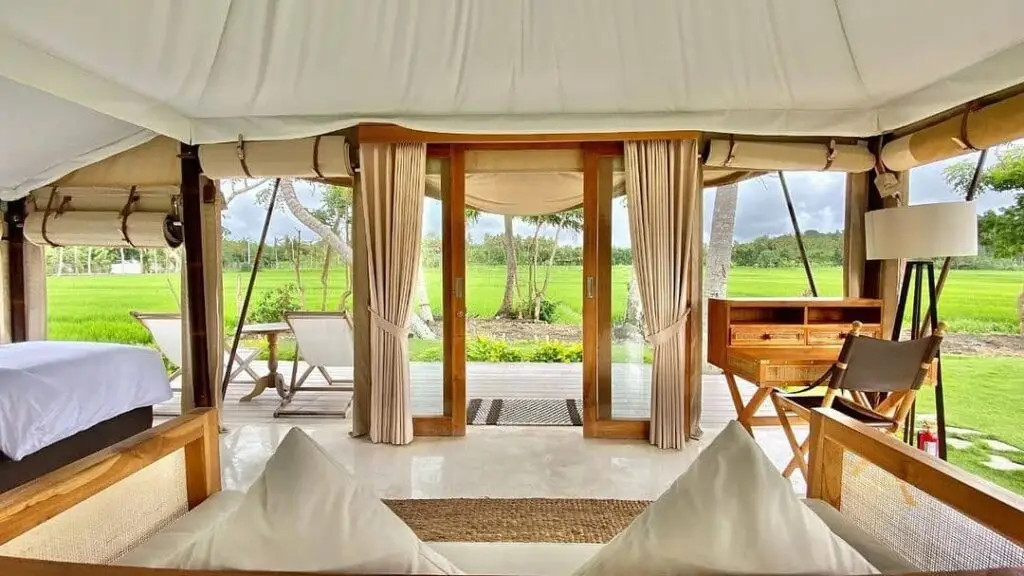 Tented villa at Bali Beach Glamping
Another standout is the Bali Beach Glamping and Glamp Nusa (by Intanah Group), which began during the highly uncertain economic environment of the COVID-19 pandemic. Initially launched as a single wedding venue, the project used Escape Nomade’s tented architecture to offer a stunning yet open-air solution for couples looking to marry in nature, safely and elegantly. The success of that first venture quickly laid the groundwork for aggressive expansion. The brand’s rapid scaling highlights the twin advantages of Escape Nomade’s approach: speed of deployment and strong guest appeal. In a post-pandemic world, where flexibility and authenticity are prized, the brand’s modular, low-impact structures provide a ready solution.
Further afield, Escape Nomade has executed projects in the Middle East, designing desert-based wellness and hospitality retreats that must withstand extreme heat, wind, and sand—conditions that would quickly degrade conventional structures. In Africa, their tented lodges have enabled conservation-based tourism in remote reserves, offering immersive safari experiences with minimal disruption to the natural habitat. In Europe, they’ve worked with private estates and boutique hotels, using their mobile, sculptural architecture to create glamping suites that add experiential value without the burden of permanent construction permits.
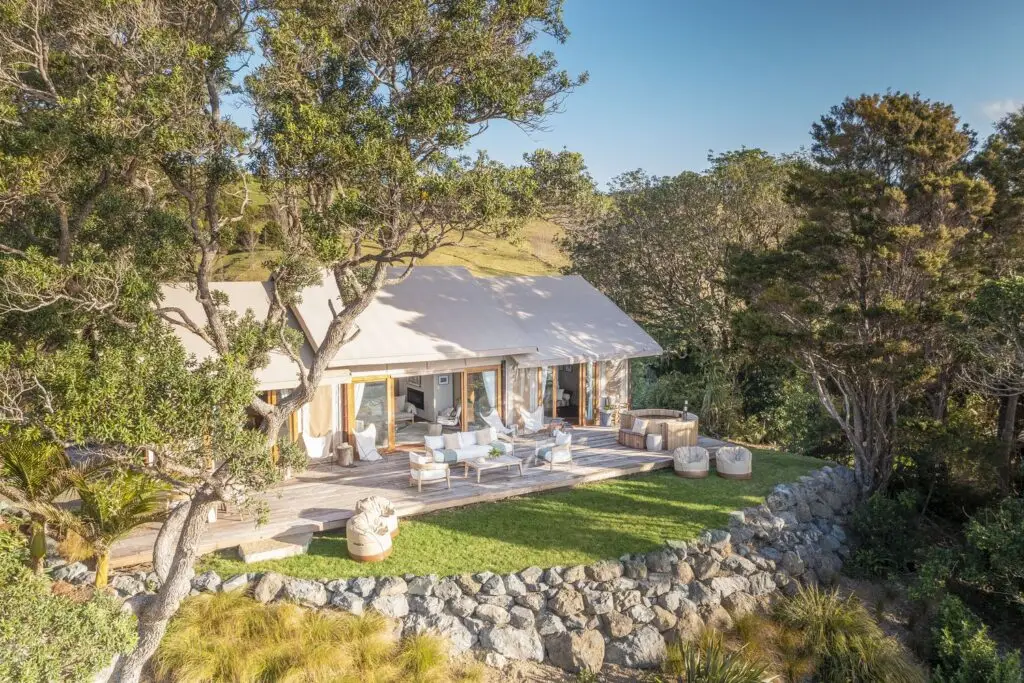 Tented villa at Anderson Cove, New Zealand
Each of these projects, while geographically and culturally distinct, share a common thread: Escape Nomade’s ability to translate their design ethos into operational and commercial success. Their tents are not only visually stunning and environmentally sound; they are also smart business investments. The company’s emphasis on long-term durability, low maintenance cycles, and modular flexibility provides developers with a product that reduces long-term costs while enhancing guest satisfaction and retention.
Moreover, Escape Nomade’s structures are increasingly being embraced not only by independent developers but also by global hospitality brands and forward-thinking real estate investors. Their proven ability to drive up Average Daily Rates (ADR), improve length of stay, and support a premium guest positioning makes them particularly attractive for projects targeting the high-end eco-conscious traveller.
In essence, Escape Nomade’s case studies—from Phuket to Bali, from the savannahs of Africa to the vineyards of Europe—form a growing library of evidence-based success. They do not merely prove that tented architecture is viable—they show that it is highly desirable, uniquely differentiated, and increasingly essential in a hospitality market that demands both beauty and responsibility.
Capturing the Conscious Traveller
Escape Nomade’s core market lies in the modern, mindful traveller—primarily Gen Z through to forty-something urbanites. These guests are not just seeking luxury but meaning. They crave serenity, sustainability, and a sense of cultural immersion. They are also willing to pay a premium for it.
The design strategy aligns with this demographic beautifully. Every element is human-centred, optimising privacy, flow, and visual narrative. Escape Nomade integrates local crafts and contextual materials, ensuring that each structure tells a story—of place, of purpose, of peace.
In this sense, the tents become more than rooms—they become destinations in themselves. This elevates Average Daily Rates (ADR) and Guest Perceived Value, offering substantial returns for hospitality investors looking to differentiate in a crowded market.
CROSS Celesta: A Canvas for Purposeful Design
The collaboration with CROSS Hotels & Resorts on the CROSS Celesta Nusa Penida development represents a landmark project for Escape Nomade. It brings together two brands with shared values—conscious development, sustainable design, and cultural reverence.
What distinguishes CROSS Celesta is not just its environmental responsibility, but its cultural depth. The design concept honours Balinese philosophy and local materials. Limestone quarried from the island becomes the resort’s grounding stone, while the Flame of the Forest tree (locally known as Flamboyan) is featured in the landscaping, its fiery blossoms marking the entrance in an homage to the island’s natural drama.
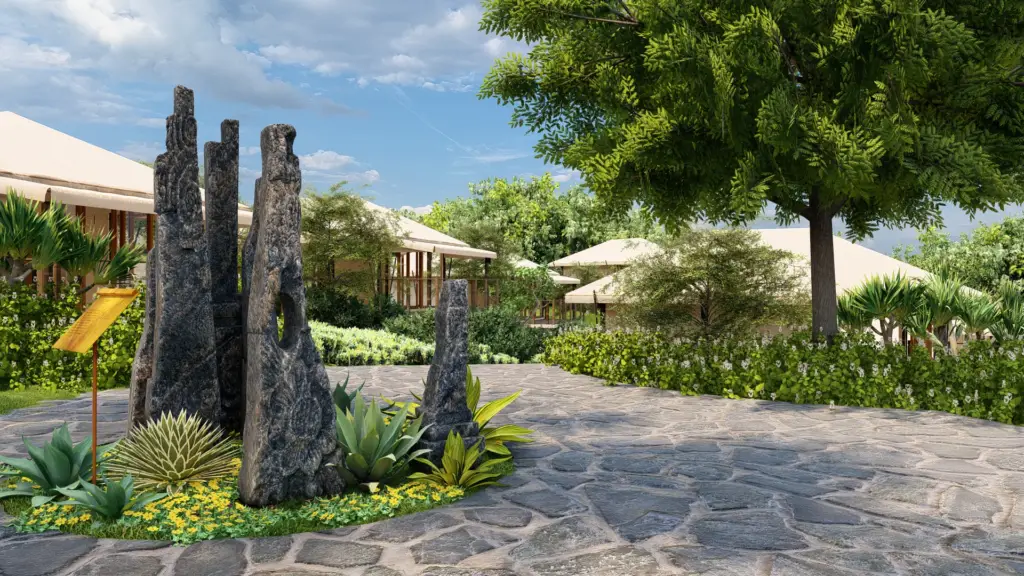 Perhaps most notably, the project includes a handcrafted stone sculpture based on star constellations, created in collaboration with SHL Asia, visible from Nusa Penida’s pristine skies. This cosmic gesture symbolically ties the architecture to the island’s celestial heritage.
Read also: Regenerative Hospitality: How CROSS Celesta is Redefining Eco-Luxury in Nusa Penida
Engineering a Legacy in Nusa Penida
What excites Escape Nomade most about CROSS Celesta is not just its architectural ambition, but its spiritual commitment to Nusa Penida’s future. It will be remembered for keeping the island wild, wise, and whole.
The legacy here is not one of extraction or overdevelopment, but one of restoration and co-existence. By involving native plants, sacred cultural references, and local materials, CROSS Celesta becomes a model for regenerative tourism.
Even the terrain itself—known for its rugged cliffs and dramatic coastlines—has guided Escape Nomade’s design logic. Tent placements are mapped according to sunrise and sunset patterns, giving guests panoramic access to light and landscape without compromising shelter or privacy.
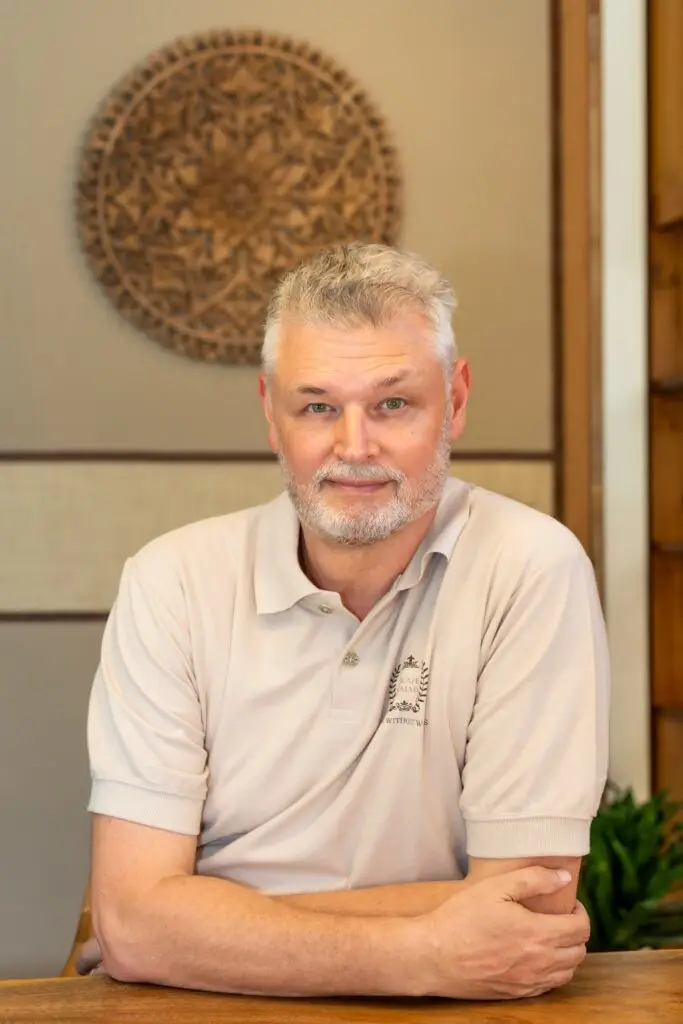
Photo of Ueli Wick — CEO of Escape Nomade
“CROSS Celesta’s legacy will be defined by more than eco-conscious architecture; it will be known as a project that contributed to keeping Nusa Penida wild, wise, and whole. Over the next two decades, it will be remembered for supporting the island’s ecosystem, offering opportunities to the local community, and celebrating the cultural richness of Bali. It’s a place where sustainability wasn’t just a feature, but a purpose that continues to inspire future developments.” – Ueli Wick.
Final Thoughts
The collaboration between Escape Nomade and CROSS Celesta Nusa Penida is more than a development project—it is a narrative of intention. A vision of luxury that places the Earth at its centre, not its expense. In an era defined by environmental urgency and shifting guest values, this partnership stands as a compelling case study in elegance with conscience—where design, ecology, and culture converge.
For those seeking to align their investments with purpose, CROSS Celesta Nusa Penida is now open for fractional investment. This is a rare opportunity to be part of a legacy-driven project that offers both meaningful returns and lasting impact—where your capital supports not just a resort, but a regenerative model for the future of luxury hospitality.
To explore early investment opportunities with CROSS Celesta Nusa Penida, you may download our investor deck or arrange a private consultation with our team. This is more than a financial opportunity—it is an invitation to help shape the future of sustainable luxury travel in one of the world’s most captivating island destinations.